
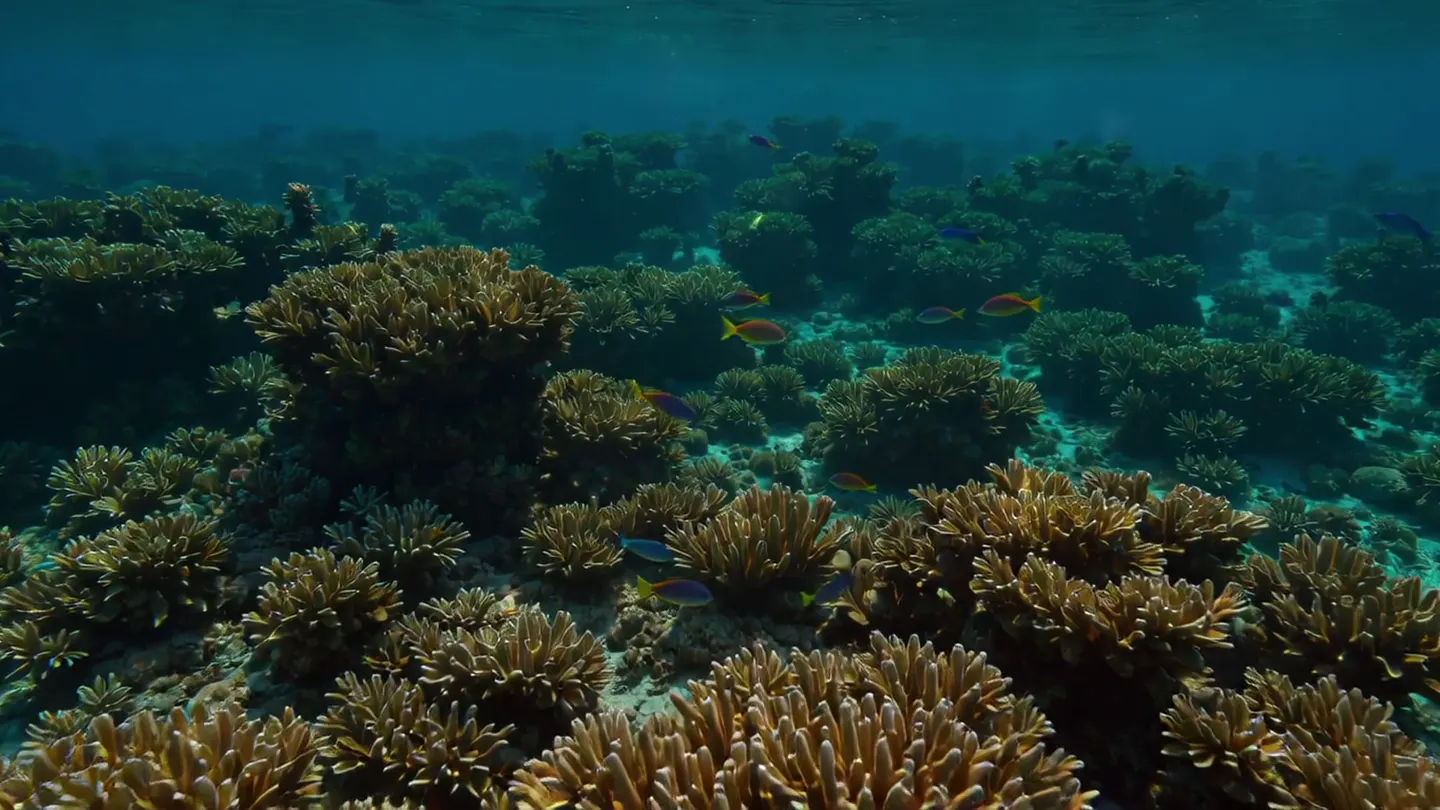
Your underwater field guide
Who just swam by?
Start with the whole fish. Browse families, compare look-alikes, or narrow the possibilities by what you noticed. Explore other Caribbean reef life in the categories below.
- Native
Nassau Grouper
Epinephelus striatus
Robust, moderate-sized grouper with large eyes; light beige to tawny (pinkish-red in deeper water) with five dark brown vertical bars, a large black saddle blotch on the
- Native
Red Hind
Epinephelus guttatus
Medium grouper, greenish-gray to light brown above grading to white below, covered with many dull orange-red to brown spots; darker spots form about five faint diagonal b
- Native
Coney
Cephalopholis fulva
Small grouper typically red with fins to match, covered in small black-edged blue spots, with two prominent black spots on the top of the caudal peduncle and a pair of bl
- Native
Graysby
Cephalopholis cruentata
Small grouper with a fusiform body; pale gray to brown with many reddish-brown spots and four contrasting dark or white spots along the base of the dorsal fin; three flat
- Native
Black Grouper
Mycteroperca bonaci
Oblong, olive-to-grey grouper with dark rectangular blotches and small bronze hexagonal spots on the head and lower sides; outer third of the soft dorsal, anal and caudal
- Native
Yellowtail Snapper
Ocyurus chrysurus
Blue to violet back with scattered yellow spots; prominent yellow mid-lateral band from snout to tail base; whitish lower sides with narrow reddish and yellow stripes; ye
- Native
Mutton Snapper
Lutjanus analis
Relatively deep-bodied snapper with a nearly crescent-shaped tail and long pectoral fins reaching the anus/anal fin origin; olive-green back, whitish sides with reddish t
- Native
Schoolmaster
Lutjanus apodus
Snapper with a long pointed snout, large mouth and one pair of enlarged upper canines; olive-gray to brownish body with about eight narrow pale vertical bars (faint or ab
- Native
Gray Snapper
Lutjanus griseus
Snapper with a slightly concave head profile and long pointed snout; gray to green with a reddish tinge and rows of small reddish-orange spots along the sides; median fin
- Native
Queen Parrotfish
Scarus vetula
Fusiform parrotfish with fused beak-like teeth; dorsal fin IX,10, anal fin III,9. Initial phase dark gray with a broad white stripe a little below mid-side; terminal (sup
- Native
Stoplight Parrotfish
Sparisoma viride
Large parrotfish with plate-like scales and a fused-tooth beak; tail changes from truncate in young to crescent-shaped in large males. Terminal males are green with three
- Native
Rainbow Parrotfish
Scarus guacamaia
Fins dull orange with green tongues extending into dorsal and anal fins; blue margins on median fins; blue-green dental plates; fusiform body.
Start here
Fish change as they grow. A fish can be yellow when small and blue when older. Look at the whole animal: body shape, tail, pattern and color. Then ask where you saw it and how deep it was.
Glossary: key words
- Family
- A group of related fish.
- Juvenile
- A young fish. It can look very different from adults.
- Initial phase
- A color phase seen in some fish such as parrotfish.
- Terminal phase
- An adult color phase in some fish; for stoplight parrotfish, it describes green males.
- Tail shape
- Truncate is straight-edged, emarginate has a slight notch, lunate is crescent-shaped.
Observe safely
- Look, do not touch, chase or feed fish or coral.
- Stay with a buddy or adult and keep to depths you are trained for.
- Never handle a fish with spines. Report, do not catch.
- Keep your fins off the bottom.
Record the whole fish, its markings and where it was swimming.
Identification activity
Pick a fish card. Write what you see, then compare its colors, markings and body shape. Describe the clues that helped you identify it.
More from CRFF
For reef-fish ecology, conservation and CRFF’s local work, explore the Caribbean Reef Fish Conservation Guide. This field guide focuses on identifying what you see.
Resources and links
CRFF Reef Updates
Keep exploring beyond the dive.
Get Caribbean fish identification tips, reef stories and CRFF conservation updates.
Caribbean Fish Identification Worksheet
Name: ____________________ Date: ____________ Place and depth: ____________
- Body shape (round, long, flat, oval):
- Colors and patterns:
- Tail shape:
- Where it was swimming:
- Which traits are you unsure of?
- Draw the fish on the back.
Record what you observe. Fish may change color and pattern as they grow; compare the whole animal and its surroundings.