
01 / SPECIES PROFILE
Species Overview
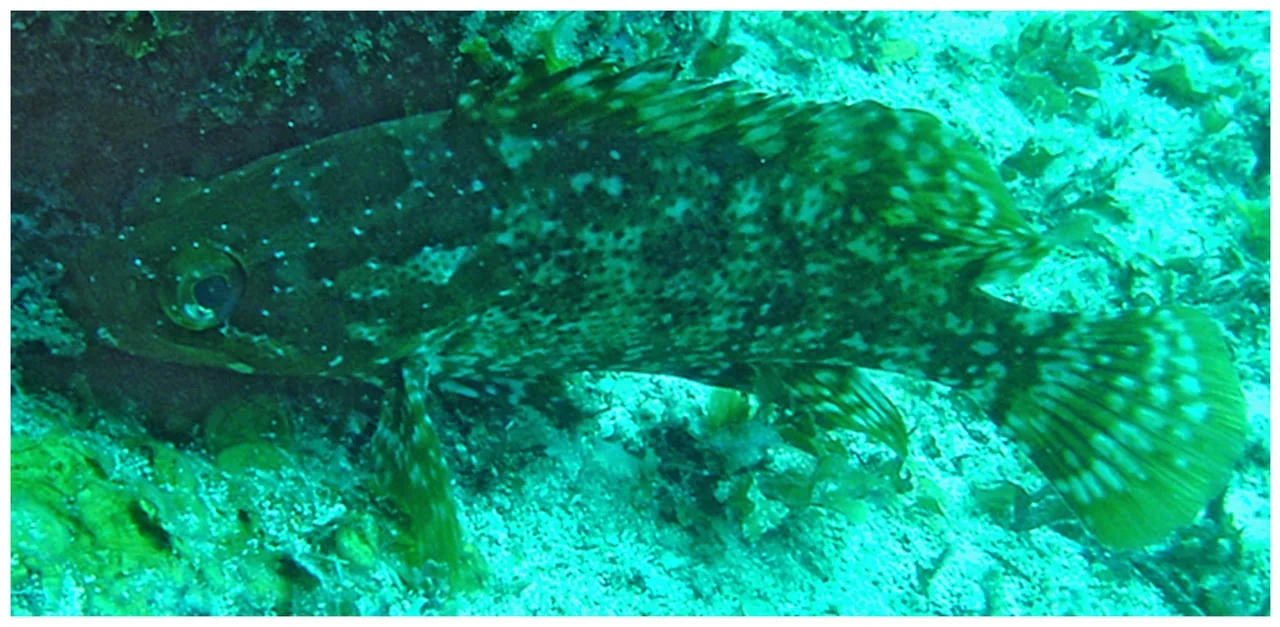
Small, mottled grouper with orange-brown spots and blotches; body almost as deep as the head is long
- Family
- Epinephelidae
- Size
- Maximum recorded 33 cm TL (13 in).
- Depth range
- 2-30 m.
- Habitat
- Seagrass and rocky areas; hides in crevices or lies among seaweed by day.
- Diet
- Bottom crustaceans, caught at night.
- Geographic range
- Bermuda, south Florida, the Gulf of Mexico, Bahamas and West Indies to São Paulo, Brazil; also São Tomé.
- Trophic level
- 4.01
- Vulnerability index
- 33.13
- Human hazard
- Reports of ciguatera poisoning
- Reproductive mode
- Female-to-male sex change (protogyny); External fertilization; Eggs or young are not guarded; Eggs scattered in open water or on the substrate
- Common name in Spanish
- Aceituna, Cherna, Cherne, Guaseta, Mantequilla, Mero
- Common name in French
- Varech
02 / NATURAL HISTORY
Field notes
Biology and ecology, shown where information is available for this species.
Ecological role
Nocturnal predator of crustaceans.
Behavior
Solitary and inactive by day, sometimes lying on its side half-covered with sand.
Reproduction
Thought to change sex from female to male.
Look-alikes
Hamlets (Hypoplectrus spp.): smaller, deeper-bodied and brightly colored; Graysby: has spots and dots along the dorsal fin base.
Conservation context
LC – Least Concern.
Recorded food groups and items (6)
- Acanthurus sp.
- nekton
- finfish
- bony fish
- zoobenthos
- other benthic invertebrates
Reported countries and territories (35)
- Anguilla
- Antigua and Barbuda
- Aruba
- Bahamas
- Barbados
- Belize
- Bermuda
- British Virgin Islands
- Cayman Islands
- Colombia
- Costa Rica
- Cuba
- Curaçao
- Dominica
- Dominican Republic
- French Guiana
- Grenada
- Guadeloupe
- Guyana
- Haiti
- Jamaica
- Martinique
- Mexico
- Montserrat
- Nicaragua
- Panama
- Puerto Rico
- Saint Kitts and Nevis
- Saint Lucia
- Saint Vincent and the Grenadines
- Suriname
- Trinidad and Tobago
- Turks and Caicos Islands
- United States Virgin Islands
- Venezuela
TL means total length; SL excludes the tail fin; FL measures to the tail fork. These measurements are not interchangeable.
CARIBBEAN REEF FISH FOUNDATION
From field knowledge
to reef action.
Explore the Foundation’s current conservation and research work.