
01 / SPECIES PROFILE
Species Overview
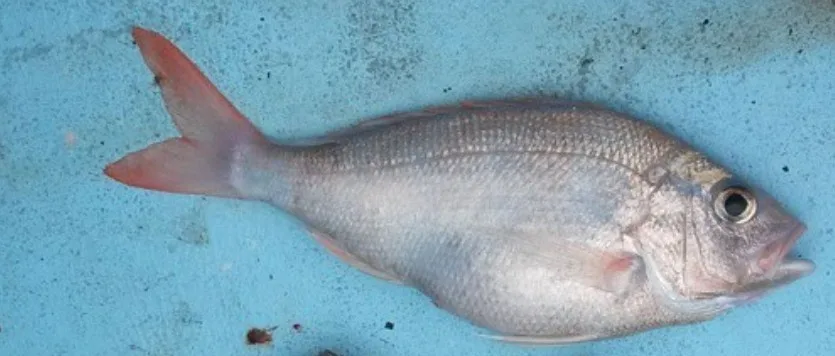
Pink snapper with a silvery sheen, very large eye and short blunt snout
- Family
- Lutjanidae
- Size
- Maximum recorded 50 cm TL (20 in); commonly 30 cm TL (12 in).
- Depth range
- 110-550 m.
- Habitat
- Deep shelf waters near the continental slope.
- Diet
- Small fishes and large plankton.
- Geographic range
- Straits of Florida, Bahamas, Greater Antilles and the Caribbean coasts of Nicaragua and Panama.
- Trophic level
- 3.87
- Vulnerability index
- 44.87
- Human hazard
- Harmless
- Reproductive mode
- Separate sexes; External fertilization; Eggs or young are not guarded; Eggs scattered in open water or on the substrate
- Common name in Spanish
- Cardenal, Muniama, Muniama de afuera, Panchito ojón, Pargo panchito, Voraz
- Common name in French
- Colas gros yeux
02 / NATURAL HISTORY
Field notes
Biology and ecology, shown where information is available for this species.
Ecological role
Deep-water predator.
Look-alikes
Queen snapper (Etelis oculatus).
Conservation context
LC – Least Concern.
Recorded food groups and items (7)
- nekton
- finfish
- bony fish
- zooplankton
- fish (early stages)
- fish eggs/larvae
- other planktonic invertebrates
Reported countries and territories (16)
- Bahamas
- Belize
- Colombia
- Costa Rica
- Cuba
- Dominican Republic
- Guyana
- Haiti
- Jamaica
- Nicaragua
- Panama
- Puerto Rico
- Suriname
- Trinidad and Tobago
- United States Virgin Islands
- Venezuela
TL means total length; SL excludes the tail fin; FL measures to the tail fork. These measurements are not interchangeable.
CARIBBEAN REEF FISH FOUNDATION
From field knowledge
to reef action.
Explore the Foundation’s current conservation and research work.