
01 / SPECIES PROFILE
Species Overview
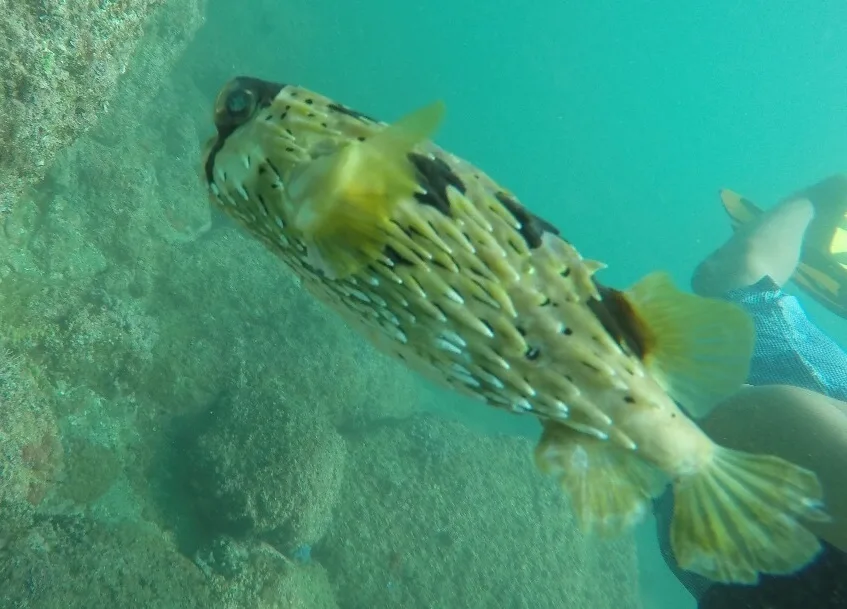
Spiny porcupinefish covered in long, sharp spines (14–16 in a row from snout to dorsal fin) that stand up when it inflates with water; teeth fused into a beak; dark blotches across the back with small black spots between them, a brown bar above and below each eye and a broad brown bar across the back of the head; fins unspotted
- Family
- Diodontidae
- IUCN Red List category
- Least Concern
- Size
- Typically 20–35 cm (8–14 in); common length 15 cm TL (6 in); maximum recorded 50 cm TL (20 in).
- Depth range
- 2–30 m; 2–200 m, usually 2–35 m.
- Habitat
- Shallow reefs, often near mangroves and seagrass, plus open soft, rocky and muddy bottoms; swims close to the bottom.
- Diet
- Feeds at night on mollusks, sea urchins, hermit crabs and crabs, cracking shells with its beak.
- Geographic range
- Caribbean:. Wider range: circumtropical; western Atlantic from Florida and the Bahamas to Brazil, eastern Atlantic 30°N–23°S.
- Trophic level
- 3.72
- Vulnerability index
- 27.15
- Human hazard
- Reports of ciguatera poisoning
- Spawning seasonality
- one clear seasonal peak per year
- Reproductive mode
- Separate sexes; External fertilization; Eggs or young are not guarded
- Common name in Spanish
- Guanábana, Pejerizo, Pejerizo balón, Pez eriso, Pez erizo, Pez erizo balón, Pez erizo mapache, Puercoespín balón, Puercoespín pintado, Tamboril negro, Tamborillo
- Common name in French
- Petit porc-épic, Porc-épic ballon, Porc-épine ballon, Souffleur à épines
02 / NATURAL HISTORY
Field notes
Biology and ecology, shown where information is available for this species.
Larvae are mostly yellow with red spots and carry a thin shell for about ten days before spines develop; metamorphosis about three weeks after hatching; juveniles are pelagic to about 6–9 cm, often drifting with Sargassum, and are spotted most strongly on the belly.
Nocturnal predator of hard-shelled invertebrates (trophic level about 3.9,); prey for tunas and dolphins as juveniles and for sharks as adults.
Mostly solitary, though young and subadults may form small groups; nocturnal, hiding in crevices by day; slow, shy and retreats from divers; can change color when excited.
Males nudge females toward the surface to spawn; eggs are buoyant and hatch in about four days.
Spotted Porcupinefish (Diodon hystrix): larger with a wider head, has small black spots that extend onto the fins and no large dark blotches; Balloonfish has dark body blotches and unspotted fins.
LC – Least Concern; taken in minor fisheries, the aquarium trade, as dried tourist novelties and for Chinese medicine
Recorded food groups and items (71)
- Loliginidae
- nekton
- cephalopods
- squids/cuttlefish
- Blenniidae
- finfish
- bony fish
- Ophidiidae
- zoobenthos
- benthic crust.
- crabs
- Calappidae
- Cancridae
- Leucosiidae
- Portunidae
- Raninidae
- Xanthidae
- Nephropidae
- lobsters
- Crustacea
- Alpheidae
- shrimps/prawns
- Caridea
- Palaemonidae
- Penaeidae
- Sicyoniidae
- Eurysquillidae
- stomatopods
- Lysiosquilla
- Squillidae
- echinoderms
- sea urchins
- Cardiidae
- mollusks
- bivalves
- Donacidae
- Glycymerididae
- Lucinidae
- Mytilidae
- Pectinidae
- Solemyidae
- Tellinidae
- Veneridae
- Capulidae
- gastropods
- Cerithiidae
- Ficidae
- Gastropoda
- Nassariidae
- Naticidae
- Olivellinae
- Olividae
- Pyramidellidae
- Aliger gigas
- Turritellidae
- Dentaliidae
- other benthic invertebrates
- Polychaeta
- worms
- polychaetes
- Serpulidae
- zooplankton
- fish (early stages)
- fish eggs/larvae
- Cavoliniidae
- other planktonic invertebrates
- Euphausiacea
- planktonic crust.
- euphausiids
- Brachyura
- Stomatopoda
Reported countries and territories (15)
- Bahamas
- British Virgin Islands
- Cayman Islands
- Colombia
- Cuba
- Haiti
- Jamaica
- Martinique
- Mexico
- Nicaragua
- Panama
- Puerto Rico
- Saint Lucia
- Trinidad and Tobago
- United States Virgin Islands
TL means total length; SL excludes the tail fin; FL measures to the tail fork. These measurements are not interchangeable.
CARIBBEAN REEF FISH FOUNDATION
From field knowledge
to reef action.
Explore the Foundation’s current conservation and research work.