
01 / SPECIES PROFILE
Species Overview
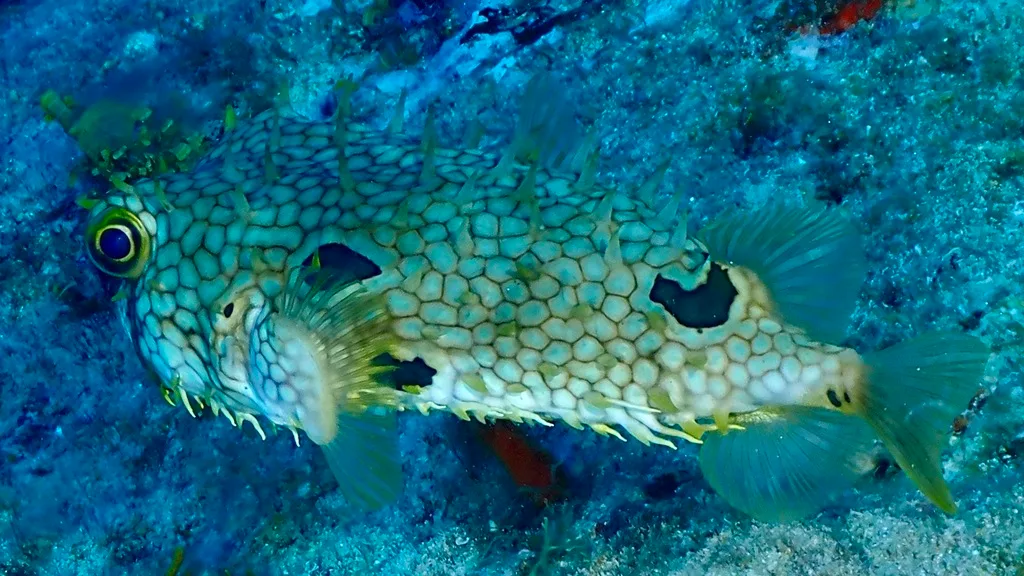
Short, deep burrfish with a fine network of lines around pale cell-like areas and five or more black blotches, including a large black spot above the pectoral fin with a smaller one below and behind it; short rigid spines, about 12 in a row from head to dorsal fin
- Family
- Diodontidae
- IUCN Red List category
- Least Concern
- Size
- Maximum 30 cm TL [11.8 in]; Published accounts give up to 25 cm [10 in].
- Depth range
- 2-25 m; 1-44 m.
- Habitat
- Coral reefs next to seagrass and rubble areas.
- Diet
- Trophic level estimated at 3.6
- Geographic range
- Caribbean, Florida, Bahamas and Brazil; western Atlantic from southeastern Florida and the Bahamas to northeastern Brazil
- Vulnerability index
- 28.12
- Human hazard
- Harmless
- Reproductive mode
- Separate sexes; External fertilization; Eggs or young are not guarded
- Common name in Spanish
- Guanábana, Guanábana antillana, Guanábana caribeña, Pejerizo, Tamboril erizo
02 / NATURAL HISTORY
Field notes
Biology and ecology, shown where information is available for this species.
Carnivore (trophic level about 3.6).
Bridled Burrfish (Chilomycterus antennatus): small black spots on head and body and a long fleshy tentacle above each eye, lacking the Web Burrfish's net-like pattern and large black blotches (descriptions).
LC – Least Concern; of no fisheries interest, though small numbers have entered the aquarium trade in Brazil; no specific protections found.
Reported countries and territories (27)
- Anguilla
- Antigua and Barbuda
- Aruba
- Bahamas
- Barbados
- Cayman Islands
- Colombia
- Cuba
- Curaçao
- Dominica
- Dominican Republic
- French Guiana
- Grenada
- Guadeloupe
- Haiti
- Jamaica
- Martinique
- Montserrat
- Nicaragua
- Puerto Rico
- Saint Kitts and Nevis
- Saint Lucia
- Saint Vincent and the Grenadines
- Suriname
- Trinidad and Tobago
- Turks and Caicos Islands
- Venezuela
TL means total length; SL excludes the tail fin; FL measures to the tail fork. These measurements are not interchangeable.
CARIBBEAN REEF FISH FOUNDATION
From field knowledge
to reef action.
Explore the Foundation’s current conservation and research work.