

01 / SPECIES PROFILE
Species Overview
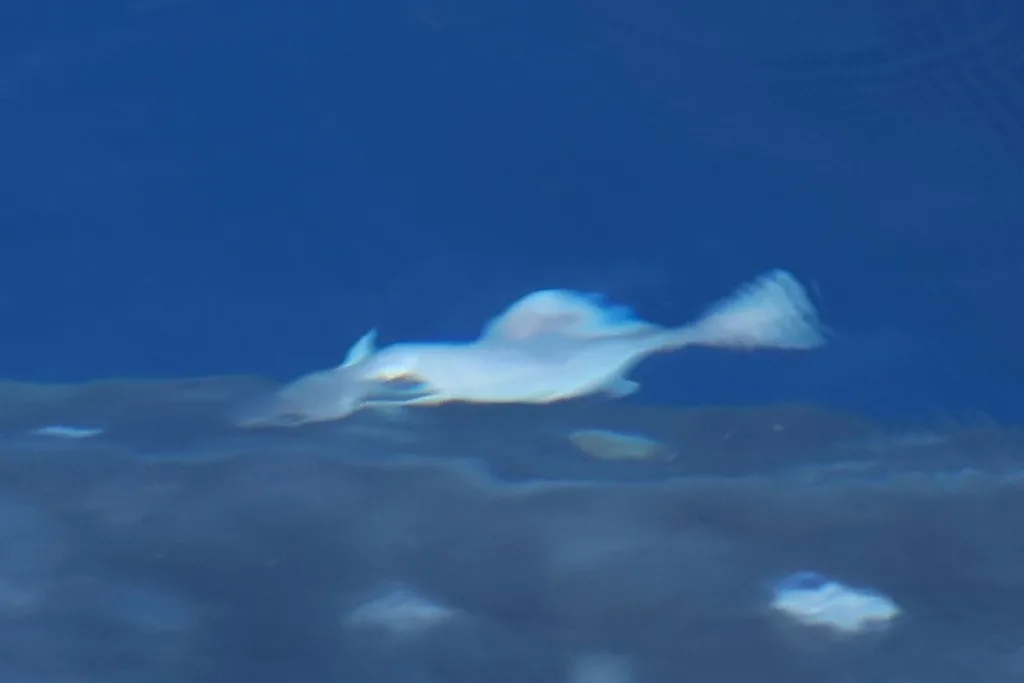
Dark brownish-gray fish with a flat oval sucking disc on top of the head, which developed from the first dorsal fin; deeper body than the sharksucker
- Family
- Echeneidae
- Size
- Maximum recorded 86.4 cm TL (34 in); commonly 40 cm TL (16 in); heaviest published weight 1.1 kg.
- Depth range
- 0-200 m.
- Habitat
- Attached to sharks, other large fishes, sea turtles and even ships; sometimes swims freely.
- Diet
- Parasitic copepods picked from its host.
- Geographic range
- Warm seas worldwide.
- Maximum weight
- 1.1 kg
- Trophic level
- 3
- Vulnerability index
- 47.51
- Human hazard
- Harmless
- Reproductive mode
- Separate sexes; External fertilization; Eggs or young are not guarded; Eggs scattered in open water or on the substrate
- Common name in Spanish
- Pega, Remora, Rémora, Rémora tiburonera, Sapito, Sapito común
- Common name in French
- Pilote, Remora, Rémora, Rémora des requins
02 / NATURAL HISTORY
Field notes
Biology and ecology, shown where information is available for this species.
Ecological role
Cleaner of parasites from sharks and other large animals.
Behavior
Hitches rides on large animals, including inside their gill chambers.
Look-alikes
Sharksucker (Echeneis naucrates): slimmer, with a dark stripe along the side.
Conservation context
LC – Least Concern.
Recorded food groups and items (4)
- parasitic copepods
- zoobenthos
- benthic crust.
- benthic copepods
Reported countries and territories (31)
- Anguilla
- Antigua and Barbuda
- Aruba
- Bahamas
- Barbados
- British Virgin Islands
- Cayman Islands
- Colombia
- Costa Rica
- Cuba
- Curaçao
- Dominica
- Dominican Republic
- Grenada
- Guadeloupe
- Guatemala
- Haiti
- Honduras
- Jamaica
- Martinique
- Mexico
- Montserrat
- Nicaragua
- Panama
- Puerto Rico
- Saint Kitts and Nevis
- Saint Lucia
- Saint Vincent and the Grenadines
- Trinidad and Tobago
- Turks and Caicos Islands
- United States Virgin Islands
TL means total length; SL excludes the tail fin; FL measures to the tail fork. These measurements are not interchangeable.
CARIBBEAN REEF FISH FOUNDATION
From field knowledge
to reef action.
Explore the Foundation’s current conservation and research work.