
01 / SPECIES PROFILE
Species Overview
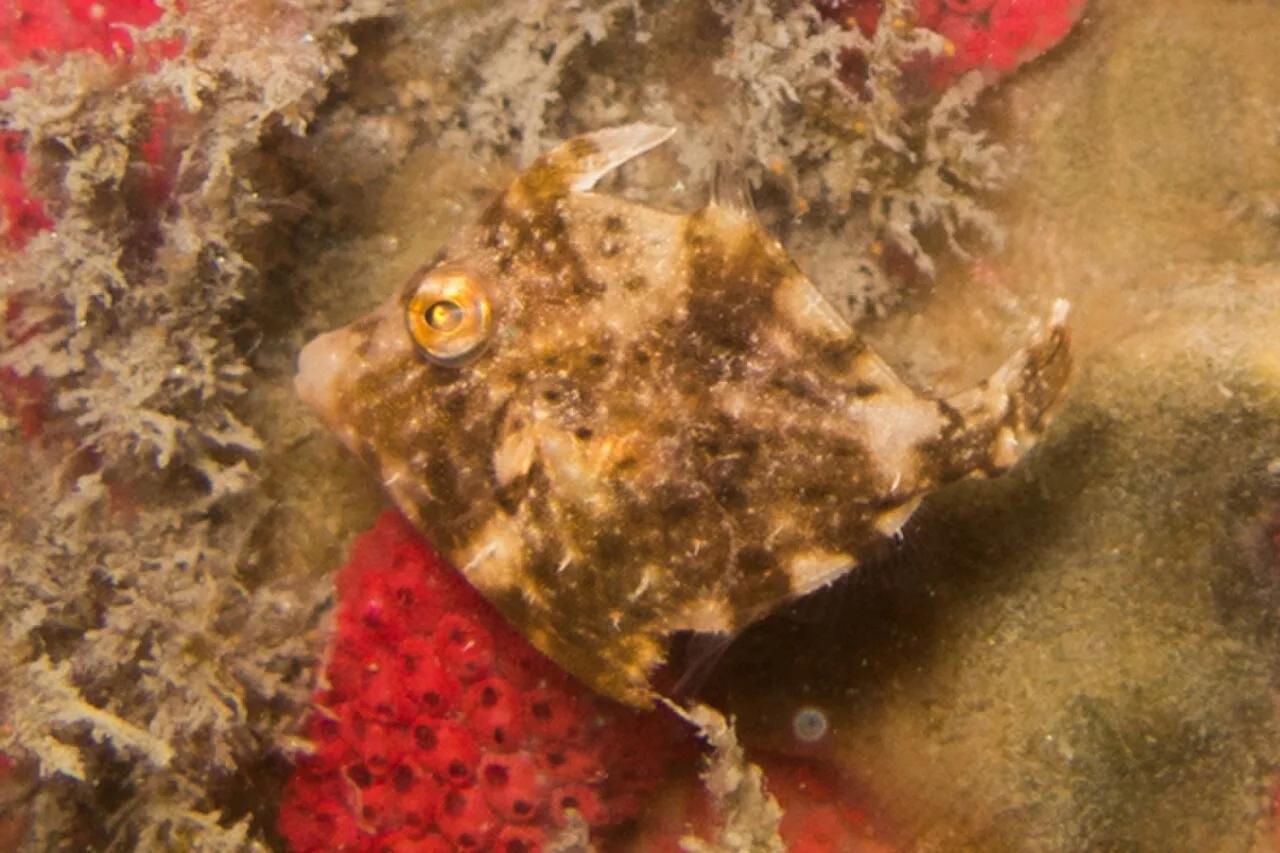
Short, deep body with an almost straight profile from snout to the first dorsal spine; dorsal fin with 2 spines and 27-29 soft rays, anal fin 27-29 soft rays; no enlarged caudal-peduncle spines, but males carry an elongate patch of bristle-like spinules on the peduncle
- Family
- Monacanthidae
- Size
- Commonly 10 cm TL [4 in]; maximum 20 cm TL [7.9 in]. Published accounts give up to 15 cm [6 in].
- Depth range
- 0-15 m; Published accounts record to 80 m.
- Habitat
- Marine, reef-associated; mostly offshore, including floating seaweed and flotsam, and around islands.
- Diet
- Probably plants and small invertebrates; trophic level about 2.9.
- Geographic range
- Florida, Bahamas, Caribbean, Gulf of America and Bermuda; western Atlantic from Bermuda and North Carolina through the northern Gulf to southeastern Brazil
- Trophic level
- 2.85
- Vulnerability index
- 24.95
- Human hazard
- Reports of ciguatera poisoning
- Common name in Spanish
- Chivo, Lija, Lija ciliada, Lija de hebra
- Common name in French
- Bourse fil
02 / NATURAL HISTORY
Field notes
Biology and ecology, shown where information is available for this species.
Juveniles associate with floating seaweed; adult males develop bristle-like spinules on the caudal peduncle..
Omnivorous grazer of plants and small invertebrates (probable); juveniles use drifting seaweed as habitat.
Pygmy Filefish (Stephanolepis setifer): short snout, dark longitudinal lines, and a filamentous ray on the male's dorsal fin. Whitespotted Filefish (Cantherhines macrocerus): brown with large orange or white blotches. Orangespotted Filefish (Cantherhines pullus): brown with irregular pale pes and a white blotch. Fringed Filefish (Monacanthus ciliatus): deep body with mottled pattern and a flank white mark.
LC – Least Concern; fishing vulnerability rated low and resilience high; no specific protections found.
Recorded food groups and items (13)
- Sargassum
- plants
- other plants
- benthic algae/weeds
- unidentfied amphipods
- zoobenthos
- benthic crust.
- amphipods
- cnidarians
- hard corals
- other benthic invertebrates
- sponges/tunicates
- sponges
Reported countries and territories (37)
- Anguilla
- Antigua and Barbuda
- Aruba
- Bahamas
- Barbados
- Belize
- Bermuda
- British Virgin Islands
- Cayman Islands
- Colombia
- Costa Rica
- Cuba
- Curaçao
- Dominica
- Dominican Republic
- French Guiana
- Grenada
- Guadeloupe
- Guatemala
- Guyana
- Haiti
- Honduras
- Jamaica
- Martinique
- Mexico
- Montserrat
- Nicaragua
- Panama
- Puerto Rico
- Saint Kitts and Nevis
- Saint Lucia
- Saint Vincent and the Grenadines
- Suriname
- Trinidad and Tobago
- Turks and Caicos Islands
- United States Virgin Islands
- Venezuela
TL means total length; SL excludes the tail fin; FL measures to the tail fork. These measurements are not interchangeable.
CARIBBEAN REEF FISH FOUNDATION
From field knowledge
to reef action.
Explore the Foundation’s current conservation and research work.