
01 / SPECIES PROFILE
Species Overview
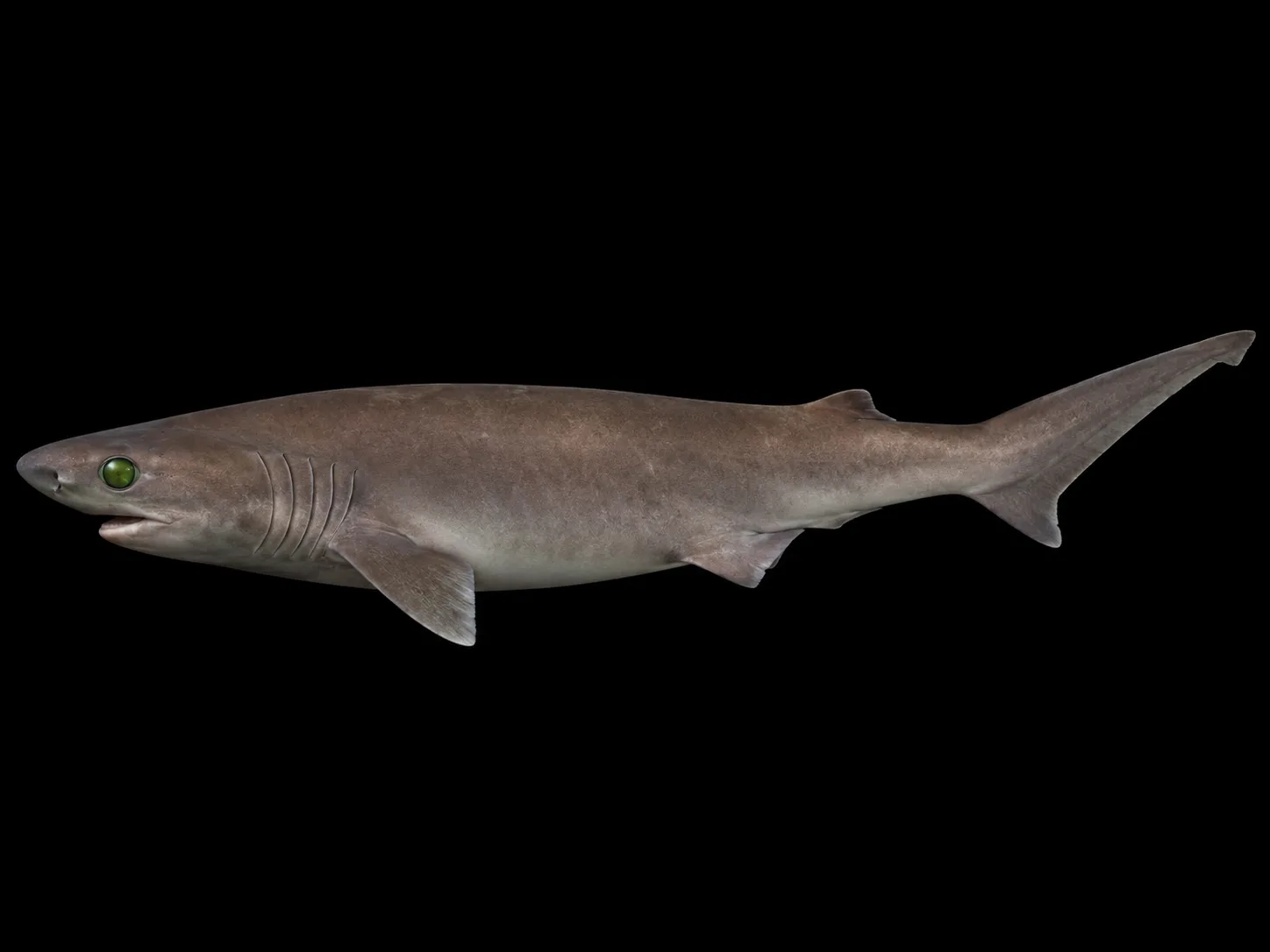
Slender with a narrow, bluntly pointed head. Grey above, abruptly lighter below; trailing edges of the fins are typically white
- Family
- Hexanchidae
- Size
- Common length 120 cm TL; maximum recorded 230 cm TL.
- Depth range
- 0–700 m.
- Habitat
- Marine; bathydemersal.
- Diet
- Found on continental and insular slopes. Feeds mainly on bony fishes and cephalopods, sometimes on crustaceans. It was reported that there is likely some stratification of the distribution by size, presumably with larger individuals present in deeper waters (mostly adult captured in the Bahamas at an average depth of 639.5 m) than the juveniles (< 350 m in Belize and northern Gulf of Mexico). Resource and habitat partitioning between juvenile and much larger adult bluntnose sixgill sharks has been suggested as predation avoidance.
- Geographic range
- Atlantic Ocean: Gulf of Mexico, the Caribbean to Venezuela and Guyanas; Bay of Biscay, from France to Morocco and the Mediterranean.
- Vulnerability index
- 60.84
- Human hazard
- Harmless
- Reproductive mode
- Separate sexes; Internal fertilization; Carries developing eggs or young; Internal live-bearing
- Common name in Spanish
- Cazón de fondo, Marrajo Ojigrande, Vilma
02 / NATURAL HISTORY
Field notes
Biology and ecology, shown where information is available for this species.
Found on continental and insular slopes. Feeds mainly on bony fishes and cephalopods, sometimes on crustaceans Viviparous, with 13 to 26 young in a litter. Size at birth measures to about 40-45 cm TL. It was reported that there is likely some stratification of the distribution by size, presumably with larger individuals present in deeper waters (mostly adult captured in the Bahamas at an average depth of 639.5 m) than the juveniles (< 350 m in Belize and northern Gulf of Mexico). Resource and habitat partitioning between juvenile and much larger adult bluntnose sixgill sharks has been suggested as predation avoidance.
Viviparous, with number of young 13 in one litter. Length at birth about 40 to 45 cm.
Atlantic Sixgill Shark (Hexanchus vitulus) has a narrow head, large eye, and 6 gill slits. Bluntnose Sixgill Shark (Hexanchus griseus) is heavy with a rounded head. Sharpnose Sevengill Shark (Heptranchias perlo) has 7 gill slits. Frill Shark (Chlamydoselachus anguineus) is eel-like with a very long mouth and low dorsal fin.
Recorded food groups and items (5)
- nekton
- finfish
- bony fish
- zoobenthos
- benthic crust.
Reported countries and territories (12)
- Bahamas
- Belize
- Cayman Islands
- Costa Rica
- Cuba
- Guatemala
- Guyana
- Honduras
- Mexico
- Nicaragua
- Trinidad and Tobago
- Venezuela
TL means total length; SL excludes the tail fin; FL measures to the tail fork. These measurements are not interchangeable.
CARIBBEAN REEF FISH FOUNDATION
From field knowledge
to reef action.
Explore the Foundation’s current conservation and research work.