

01 / SPECIES PROFILE
Species Overview
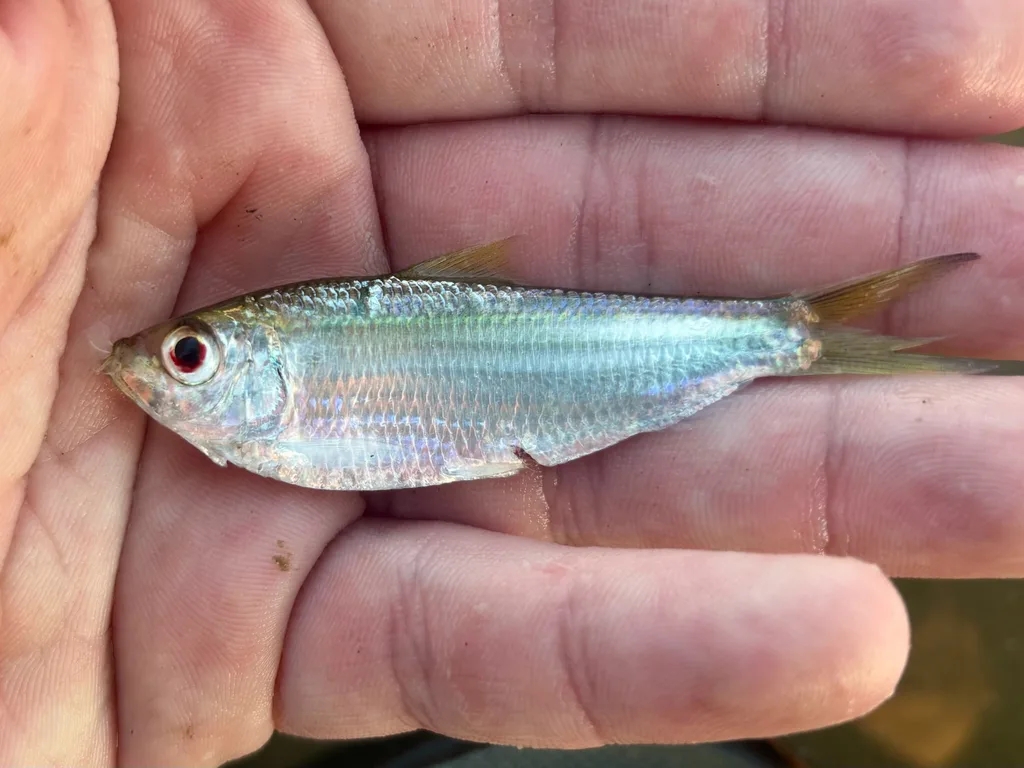
Small, silvery herring with firmly attached scales and no dark tip on the dorsal fin
- Family
- Dorosomatidae
- Size
- Maximum recorded 31.3 cm SL (12 in); commonly 10 cm SL (4 in); heaviest published weight 109.00 g.
- Depth range
- 0-50 m.
- Habitat
- Coastal waters, estuaries and lagoons, tolerating a wide range of salinity.
- Diet
- Diet includes zooplankton (small drifting animals).
- Geographic range
- Gulf of Mexico and southeastern Florida to northern Brazil, including the Bahamas and the whole Caribbean.
- Maximum weight
- 109 g
- Trophic level
- 3.52999997138977
- Vulnerability index
- 29.45
- Human hazard
- Harmless
- Common name in Spanish
- Carapachona, Conchúa, Sardina escamuda, Sardinas, Sardineta escamuda, Sardinha cascuda, Sardinita carapachona
- Common name in French
- Harengule écailleux, Harengule ècailleux, Sardine caillée
02 / NATURAL HISTORY
Field notes
Biology and ecology, shown where information is available for this species.
Ecological role
Forage fish.
Behavior
Schools; young often along sandy beaches.
Look-alikes
Redear herring (Harengula humeralis): orange spot behind the gill cover; Scaled herring (H. jaguana): often confused with it.
Conservation context
LC – Least Concern.
Recorded food groups and items (14)
- nekton
- finfish
- bony fish
- zoobenthos
- insects
- benthic crust.
- amphipods
- ostracods
- stomatopods
- cnidarians
- worms
- zooplankton
- planktonic crust.
- planktonic copepods
Reported countries and territories (36)
- Anguilla
- Antigua and Barbuda
- Aruba
- Bahamas
- Barbados
- Belize
- British Virgin Islands
- Cayman Islands
- Colombia
- Costa Rica
- Cuba
- Curaçao
- Dominica
- Dominican Republic
- French Guiana
- Grenada
- Guadeloupe
- Guatemala
- Guyana
- Haiti
- Honduras
- Jamaica
- Martinique
- Mexico
- Montserrat
- Nicaragua
- Panama
- Puerto Rico
- Saint Kitts and Nevis
- Saint Lucia
- Saint Vincent and the Grenadines
- Suriname
- Trinidad and Tobago
- Turks and Caicos Islands
- United States Virgin Islands
- Venezuela
TL means total length; SL excludes the tail fin; FL measures to the tail fork. These measurements are not interchangeable.
CARIBBEAN REEF FISH FOUNDATION
From field knowledge
to reef action.
Explore the Foundation’s current conservation and research work.