

01 / SPECIES PROFILE
Species Overview
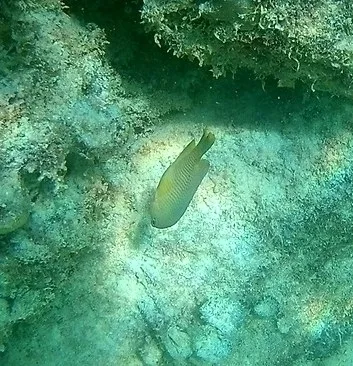
Short, deep, compressed body; dark blue or brown above and yellow below without obvious narrow vertical lines; dark spot near the rear of the dorsal fin that shrinks in larger fish; slightly forked tail with rounded lobes; 12 dorsal spines, 13-16 dorsal soft rays, 2 anal spines, 12-14 anal soft rays
- Family
- Pomacentridae (Damselfishes); subfamily Microspathodontinae
- IUCN Red List category
- Least Concern
- Size
- Typical adult 5-10 cm (2-4 in); maximum recorded 10.0 cm TL (3.9 in).
- Depth range
- 0-10 m; Published accounts give 1-12 m.
- Habitat
- Reef-associated, non-migratory; seagrass beds, coral or rocky reefs, sand areas, mangrove shores and sponge beds; less common on flourishing coral reefs; stays within about 50 cm of the bottom.
- Diet
- Adults eat algae, polychaetes, amphipods, foraminiferans and gastropods; juveniles eat harpacticoid copepods, nemerteans and polychaetes.
- Geographic range
- Caribbean, Bahamas, Florida, Bermuda and Gulf of America; tropical western Atlantic from southern Florida, Bermuda and the northern Gulf of Mexico to Brazil.
- Vulnerability index
- 21.46
- Human hazard
- Harmless
- Reproductive mode
- Separate sexes; External fertilization; Egg or nest guarding; Nesting
- Common name in Spanish
- Chopita de cola amarilla, Jaqueta bonita, Leopoldito amarillo
02 / NATURAL HISTORY
Field notes
Biology and ecology, shown where information is available for this species.
Omnivorous grazer and small-invertebrate predator (trophic level 3.1) in shallow mixed habitats.
Bottom-oriented, staying close to the substrate
Oviparous with distinct pairing; adhesive demersal eggs often laid inside empty shells or under stones; males guard and aerate eggs.
Bicolor Damselfish: dark front half changing abruptly to yellow/pale at mid-body, rather than Beaugregory's dark back over yellow belly; Threespot adults are brownish-gray with vertical dark lines along scale rows and a large blackish pectoral-base spot, which Beaugregory lacks.
LC – Least Concern; used in fisheries and the aquarium trade and taken incidentally in traps and small-mesh beach nets; fishing vulnerability low
Reported countries and territories (29)
- Anguilla
- Antigua and Barbuda
- Aruba
- Bahamas
- Barbados
- Belize
- Bermuda
- British Virgin Islands
- Cayman Islands
- Cuba
- Curaçao
- Dominica
- Dominican Republic
- Grenada
- Guadeloupe
- Haiti
- Honduras
- Jamaica
- Martinique
- Mexico
- Montserrat
- Puerto Rico
- Saint Kitts and Nevis
- Saint Lucia
- Saint Vincent and the Grenadines
- Trinidad and Tobago
- Turks and Caicos Islands
- United States Virgin Islands
- Venezuela
TL means total length; SL excludes the tail fin; FL measures to the tail fork. These measurements are not interchangeable.
CARIBBEAN REEF FISH FOUNDATION
From field knowledge
to reef action.
Explore the Foundation’s current conservation and research work.