

01 / SPECIES PROFILE
Species Overview
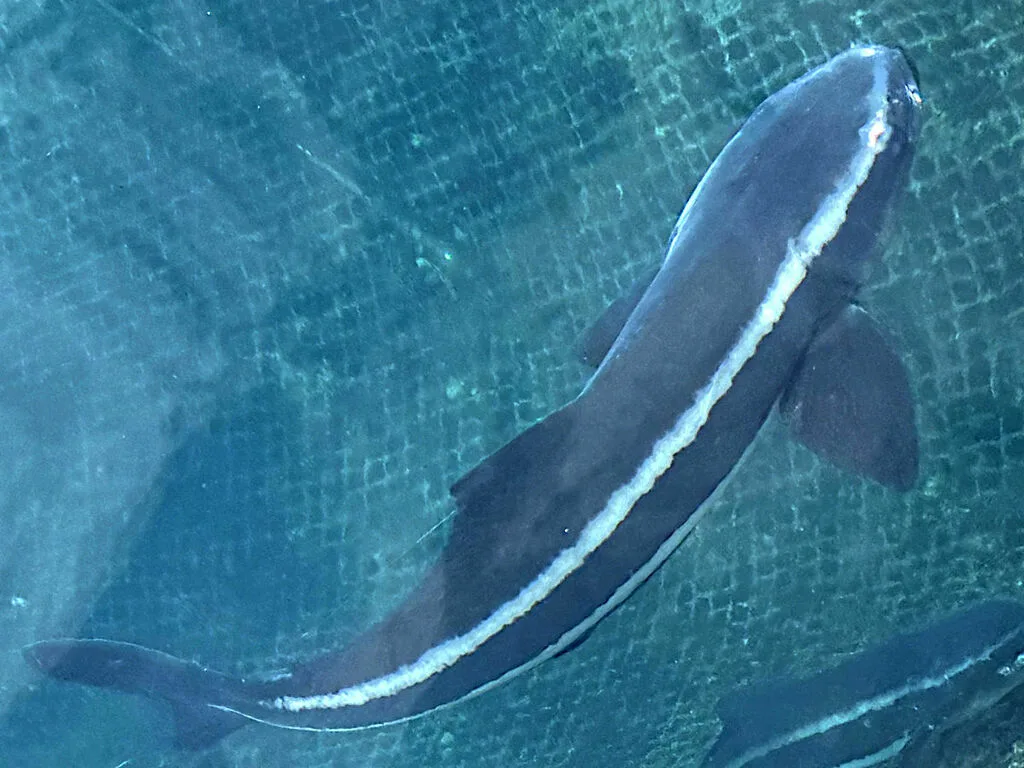
Long, dark brown fish with a broad flat head, a white belly and two silver stripes along the side; first dorsal fin made of eight short separate spines
- Family
- Rachycentridae
- Size
- Maximum recorded 200 cm TL (79 in); commonly 110 cm TL (43 in); heaviest published weight 68.0 kg.
- Depth range
- 0-1200 m.
- Habitat
- Many habitats from mud and sand to coral reefs, mangroves, pilings, buoys and drifting objects.
- Diet
- Crustaceans, fishes and squid.
- Geographic range
- Warm seas worldwide except the eastern Pacific; western Atlantic from Massachusetts to Argentina including the Caribbean. Listed for the US Virgin Islands by
- Maximum weight
- 68 kg
- Wild longevity
- 15 years
- Trophic level
- 4.08
- Vulnerability index
- 42.21
- Human hazard
- Harmless
- Spawning seasonality
- one clear seasonal peak per year
- Reproductive mode
- Separate sexes; External fertilization; Eggs or young are not guarded; Eggs scattered in open water or on the substrate
- Common name in Spanish
- Bacalao, Bonito, Bonito negro, Cabio, Cobia, Cobie, Peje Palo, Pejepalo
- Common name in French
- Cobia, Mafou
02 / NATURAL HISTORY
Field notes
Biology and ecology, shown where information is available for this species.
Ecological role
Large coastal predator.
Behavior
Often follows rays, sharks and turtles; forms small groups.
Look-alikes
Remoras: have a sucking disc; young cobia can look like sharksuckers.
Conservation context
LC – Least Concern; gamefish; farmed.
Recorded food groups and items (40)
- nekton
- cephalopods
- squids/cuttlefish
- Trinectes maculatus
- finfish
- bony fish
- Opsanus tau
- Brevoortia tyrannus
- Opisthonema oglinum
- Cyclichthys schoepfi
- Rhinoptera bonasus
- Ophidion marginatum
- Ophidion sp.
- Paralichthys dentatus
- Pomatomus saltatrix
- Micropogonias undulatus
- Scophthalmus aquosus
- Hippocampus erectus
- Hippocampus sp.
- Syngnathus floridae
- Syngnathus sp.
- Astroscopus sp.
- Cancer irroratus
- zoobenthos
- benthic crust.
- crabs
- Cancer sp.
- Callinectes sapidus
- Ovalipes ocellatus
- Ovalipes ocellatus
- Portunus gibbesii
- Neopanope sp.
- lobsters
- Squilla empusa
- stomatopods
- Sertularia sp.
- cnidarians
- Mytilus edulis
- mollusks
- bivalves
Reported countries and territories (30)
- Antigua and Barbuda
- Aruba
- Bahamas
- Barbados
- Belize
- Bermuda
- Colombia
- Costa Rica
- Cuba
- Curaçao
- Dominica
- Dominican Republic
- French Guiana
- Grenada
- Guatemala
- Guyana
- Haiti
- Honduras
- Jamaica
- Mexico
- Nicaragua
- Panama
- Puerto Rico
- Saint Kitts and Nevis
- Saint Lucia
- Saint Vincent and the Grenadines
- Suriname
- Trinidad and Tobago
- United States Virgin Islands
- Venezuela
TL means total length; SL excludes the tail fin; FL measures to the tail fork. These measurements are not interchangeable.
CARIBBEAN REEF FISH FOUNDATION
From field knowledge
to reef action.
Explore the Foundation’s current conservation and research work.