
01 / SPECIES PROFILE
Species Overview
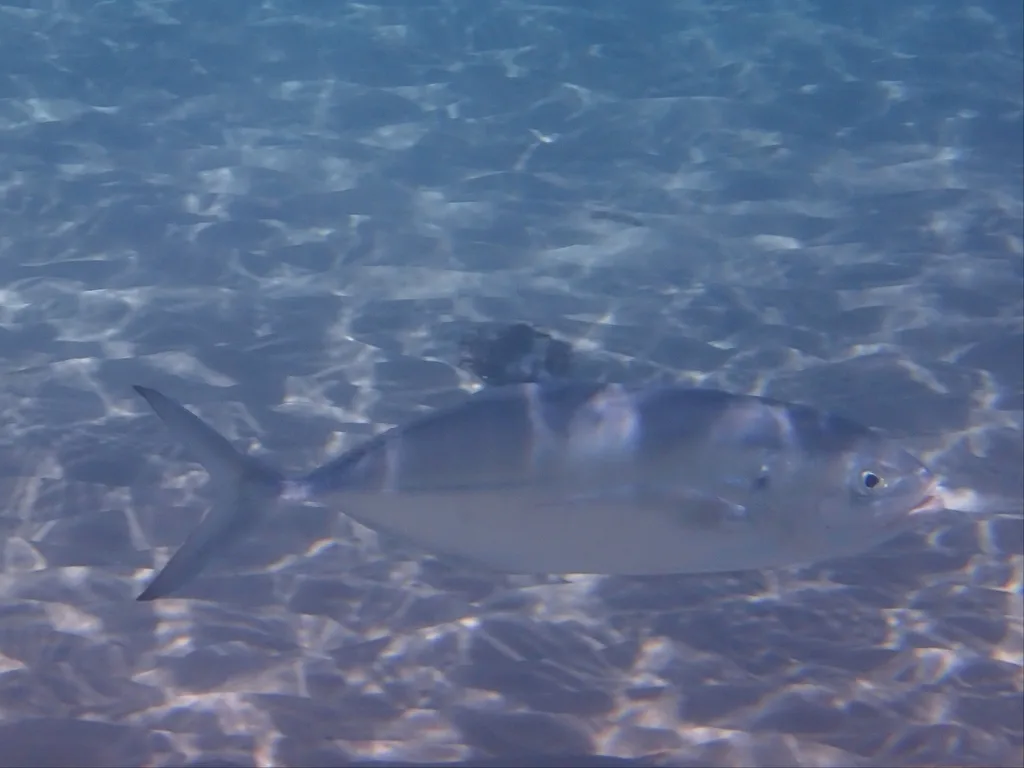
Elongate, moderately compressed jack; back light olive to bluish-green, sides silvery-grey to golden; falcate pectoral fins longer than the head; 45-56 scutes on the straight part of the lateral line; dorsal fin IX spines (total), 22-25 soft rays; anal III, 19-21 soft rays
- Family
- Carangidae
- Size
- Typically 30-60 cm (12-24 in); common 40 cm TL (16 in); maximum recorded 70 cm TL (28 in), 5.1 kg; max reported age 11 years.
- Depth range
- 0-100 m; Published accounts give 1-40 m.
- Habitat
- Reef-associated schooling fish of coastal waters; also mangroves, lagoons and estuaries (marine and brackish); juveniles with floating Sargassum.
- Diet
- Adults eat fishes, shrimps and other invertebrates.
- Geographic range
- Caribbean, Bermuda, Florida, Gulf of America, Brazil; western Atlantic from Nova Scotia to Brazil (reported to Argentina), and eastern Atlantic from Senegal to Angola incl. western Mediterranean and Ascension.
- Maximum weight
- 5 kg
- Wild longevity
- 11 years
- Trophic level
- 3.63
- Vulnerability index
- 34.26
- Human hazard
- Reports of ciguatera poisoning
- Spawning seasonality
- one clear seasonal peak per year
- Reproductive mode
- Separate sexes; External fertilization; Eggs or young are not guarded; Eggs scattered in open water or on the substrate
- Common name in Spanish
- Atún, Biñitu, Cachorreta, Cojinoa, Cojinoa negra, Cojinua, Cojinúa, Cojinúa azul, Cojinua negra, Cojinúa negra, Cojinúa prieta, Cojinuda, Cojinuda negra, Crevallé, Guïra, Jurel, Jurel azul, Jurel trompa de hierro, Madregal, Medregal, Palometa, Surell
- Common name in French
- Caran, Carangue, Carangue bonite, Carangue coubali, Carangue cuisinière, Carangue dorée, Carangue grasse, Carangue macoque, Carangue tête ronde, Chinchard, Crevaille, Jurel
02 / NATURAL HISTORY
Field notes
Biology and ecology, shown where information is available for this species.
notes juveniles carry about 7 dark crossbars on the sides and often shelter under floating Sargassum.
Mid-level schooling predator of small fishes and crustaceans; a common bait and forage species for larger predators (bait use).
Schooling, mostly near the coast
Spawns offshore from January to August; eggs pelagic.
Crevalle jack (Caranx hippos): has a prominent black spot on the rear gill cover at eye level and a black spot at the upper pectoral axil, and a mostly scaleless chest; Horse-eye jack (C. latus): fully scaled chest, dark scutes, yellow tail and much larger size.
LC – Least Concern; assessed 4 Feb 2009; minor commercial fishery and gamefish.
Recorded food groups and items (14)
- nekton
- finfish
- bony fish
- zoobenthos
- benthic crust.
- crabs
- lobsters
- shrimps/prawns
- other benthic invertebrates
- zooplankton
- jellyfish/hydroids
- other planktonic invertebrates
- planktonic crust.
- planktonic copepods
Reported countries and territories (38)
- Anguilla
- Antigua and Barbuda
- Aruba
- Bahamas
- Barbados
- Belize
- Bermuda
- Bonaire, Sint Eustatius and Saba
- British Virgin Islands
- Cayman Islands
- Colombia
- Costa Rica
- Cuba
- Curaçao
- Dominica
- Dominican Republic
- French Guiana
- Grenada
- Guadeloupe
- Guatemala
- Guyana
- Haiti
- Honduras
- Jamaica
- Martinique
- Mexico
- Montserrat
- Nicaragua
- Panama
- Puerto Rico
- Saint Kitts and Nevis
- Saint Lucia
- Saint Vincent and the Grenadines
- Suriname
- Trinidad and Tobago
- Turks and Caicos Islands
- United States Virgin Islands
- Venezuela
TL means total length; SL excludes the tail fin; FL measures to the tail fork. These measurements are not interchangeable.
CARIBBEAN REEF FISH FOUNDATION
From field knowledge
to reef action.
Explore the Foundation’s current conservation and research work.