
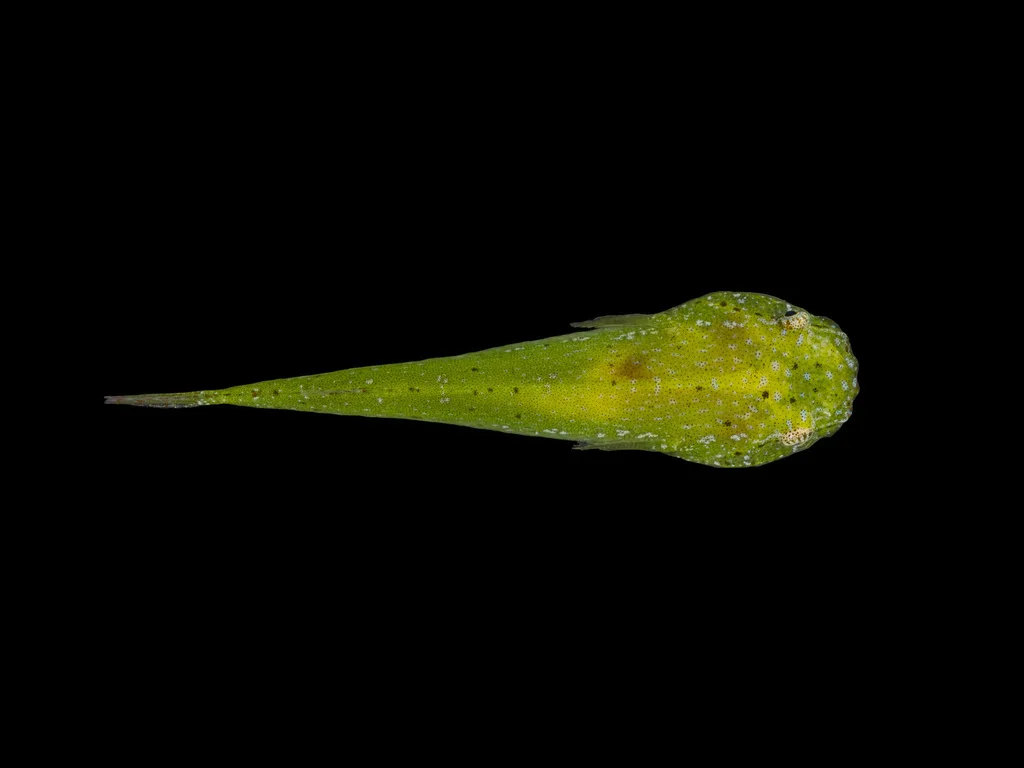

01 / SPECIES PROFILE
Species Overview
Tiny, slender, emerald-green clingfish with a suction disc on its belly
- Family
- Gobiesocidae
- Size
- Maximum recorded 2.5 cm TL (1 in).
- Depth range
- 1–15 m
- Habitat
- Turtle grass beds, usually clinging to the underside of the blades.
- Diet
- Small crustaceans such as isopods, amphipods, copepods and ostracods.
- Geographic range
- Southern Florida and the Bahamas to Espírito Santo, Brazil.
- Wild longevity
- 1 years
- Trophic level
- 3.33
- Vulnerability index
- 10
- Human hazard
- Harmless
- Spawning seasonality
- throughout the year, but peaking once
- Reproductive mode
- Separate sexes; External fertilization; Egg or nest guarding; Clutch tending
- Common name in Spanish
- Pequita esmerilada
02 / NATURAL HISTORY
Field notes
Biology and ecology, shown where information is available for this species.
Ecological role
Tiny predator in seagrass.
Behavior
Spends its whole life on seagrass blades.
Reproduction
Spawns several times.
Look-alikes
Other clingfishes; its bright green color matches seagrass.
Conservation context
LC – Least Concern.
Recorded food groups and items (7)
- zoobenthos
- benthic crust.
- amphipods
- benthic copepods
- isopods
- ostracods
- other benthic invertebrates
Reported countries and territories (19)
- Anguilla
- Antigua and Barbuda
- Bahamas
- Barbados
- Belize
- British Virgin Islands
- Cuba
- Dominica
- Grenada
- Guadeloupe
- Jamaica
- Martinique
- Mexico
- Montserrat
- Saint Kitts and Nevis
- Saint Lucia
- Saint Vincent and the Grenadines
- Trinidad and Tobago
- United States Virgin Islands
TL means total length; SL excludes the tail fin; FL measures to the tail fork. These measurements are not interchangeable.
CARIBBEAN REEF FISH FOUNDATION
From field knowledge
to reef action.
Explore the Foundation’s current conservation and research work.