
01 / SPECIES PROFILE
Species Overview
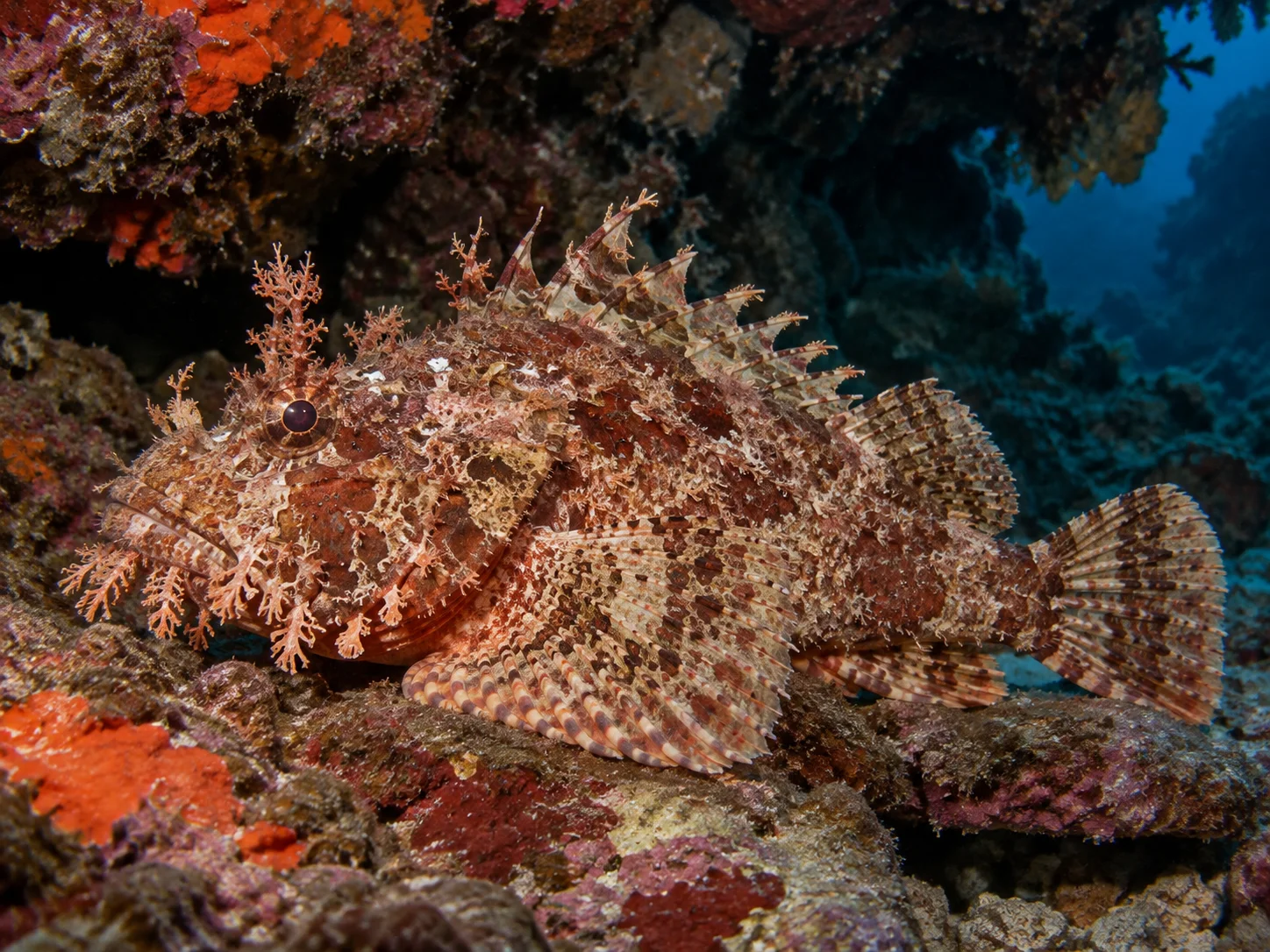
Named for long fleshy plumes above each eye; skin flaps and appendages give an algae-like look; dark brown or mottled green-brown body with white spots on head and front, three dark tail bands, and a patch of white spots at the pectoral-fin base; 12 dorsal spines, 9 soft rays; short head and snout
- Family
- Scorpaenidae
- IUCN Red List category
- Least Concern
- Size
- up to 13 cm [5 in]; Fishes of Texas maximum about 14 cm SL [5.5 in]; Snorkel STJ about 18 cm [7 in]; Published accounts list 30 cm TL [11.8 in] maximum.
- Depth range
- 1–12 m; 1–15 m.
- Habitat
- Seagrass beds, grassy bays and channels, and algae-covered sea floor in shallow water.
- Diet
- Diet includes bottom-dwelling crustaceans and bony fishes.
- Geographic range
- Caribbean and Florida; western Atlantic incl. Bermuda, Florida, eastern Gulf (Dry Tortugas) and Honduras to southern Brazil.
- Trophic level
- 4.04
- Vulnerability index
- 37.25
- Human hazard
- Venomous
- Reproductive mode
- Separate sexes; External fertilization; Eggs or young are not guarded; Eggs scattered in open water or on the substrate
- Common name in Spanish
- Escorpión plumeado, Rascacio cornudo, Rascasio
02 / NATURAL HISTORY
Field notes
Biology and ecology, shown where information is available for this species.
Camouflaged seagrass ambush predator (trophic level 3.7).
Relies on camouflage and moves only when disturbed; rarely noticed.
Separate sexes, external fertilization; oviparous egg scatterer with no parental care.
Spotted Scorpionfish (S. plumieri) is roughly twice as large and has white spots on a black pectoral axil; Plumed is distinguished by its long eye plumes and seagrass habitat (Snorkel STJ; Fishes of Texas).
LC – Least Concern (assessed 2012).
Recorded food groups and items (6)
- nekton
- finfish
- bony fish
- zoobenthos
- benthic crust.
- shrimps/prawns
Reported countries and territories (13)
- Bahamas
- Barbados
- Belize
- Bermuda
- Cayman Islands
- Cuba
- Honduras
- Jamaica
- Mexico
- Panama
- Puerto Rico
- Trinidad and Tobago
- United States Virgin Islands
TL means total length; SL excludes the tail fin; FL measures to the tail fork. These measurements are not interchangeable.
CARIBBEAN REEF FISH FOUNDATION
From field knowledge
to reef action.
Explore the Foundation’s current conservation and research work.