Caribbean Reef Fish Guide

Identify Caribbean reef fish in our 300+ species directory.

Reef fish catalog

  • Native

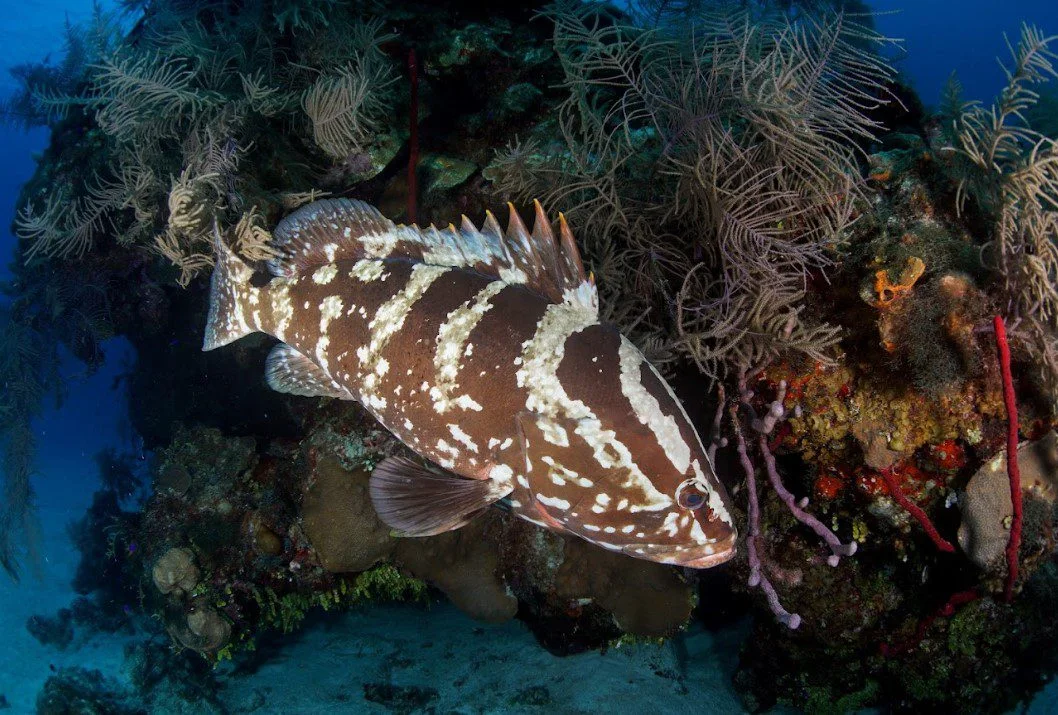
    Nassau Grouper

    Epinephelus striatus

    Robust, moderate-sized grouper with large eyes; light beige to tawny (pinkish-red in deeper water) with five dark brown vertical bars, a large black saddle blotch on t…

  • Native

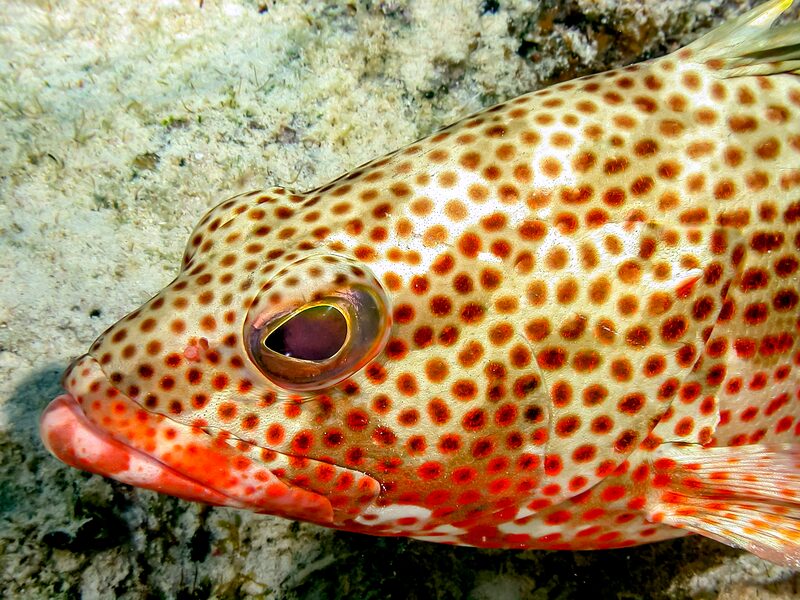
    Red Hind

    Epinephelus guttatus

    Medium grouper, greenish-gray to light brown above grading to white below, covered with many dull orange-red to brown spots; darker spots form about five faint diagona…

  • Native

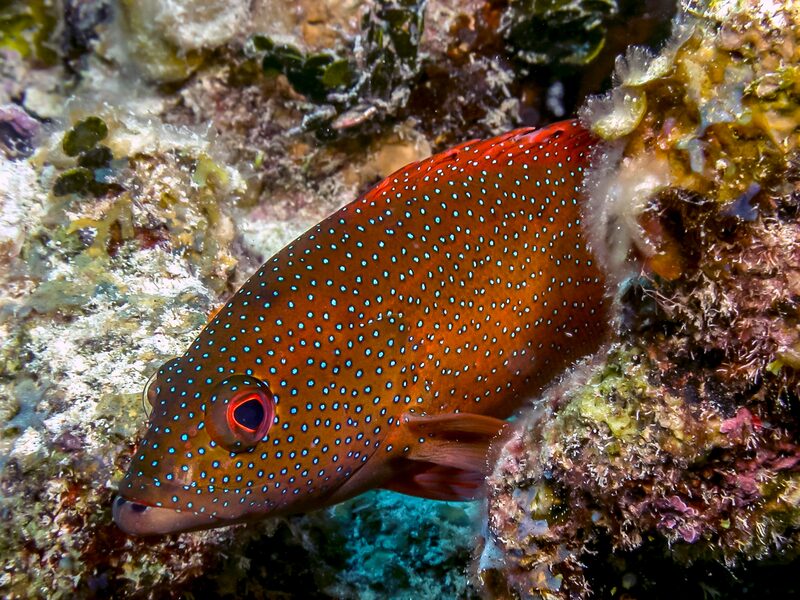
    Coney

    Cephalopholis fulva

    Small grouper typically red with fins to match, covered in small black-edged blue spots, with two prominent black spots on the top of the caudal peduncle and a pair of…

  • Native

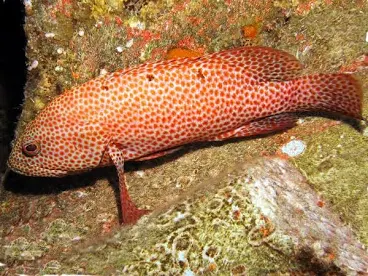
    Graysby

    Cephalopholis cruentata

    Small grouper with a fusiform body; pale gray to brown with many reddish-brown spots and four contrasting dark or white spots along the base of the dorsal fin; three f…

  • Native

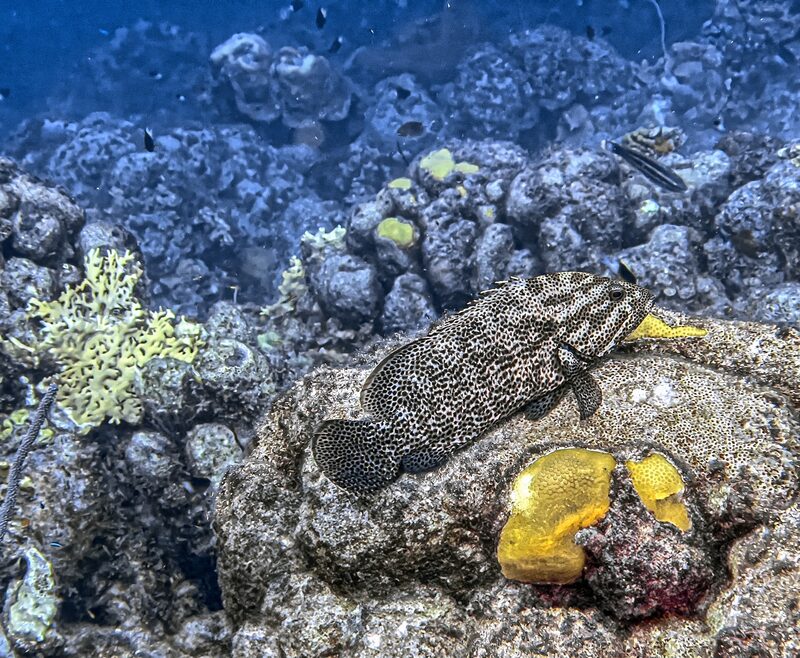
    Black Grouper

    Mycteroperca bonaci

    Oblong, olive-to-grey grouper with dark rectangular blotches and small bronze hexagonal spots on the head and lower sides; outer third of the soft dorsal, anal and cau…

  • Native

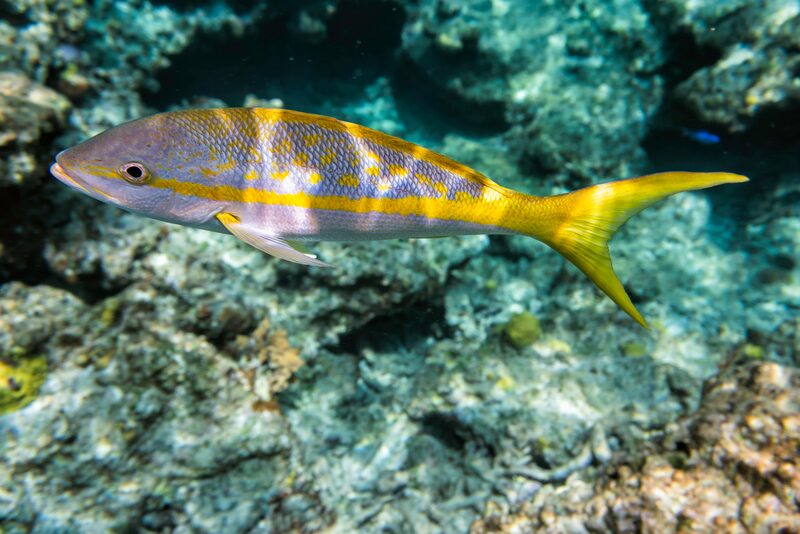
    Yellowtail Snapper

    Ocyurus chrysurus

    Blue to violet back with scattered yellow spots; prominent yellow mid-lateral band from snout to tail base; whitish lower sides with narrow reddish and yellow stripes;…

  • Native

    Mutton Snapper

    Lutjanus analis

    Relatively deep-bodied snapper with a nearly crescent-shaped tail and long pectoral fins reaching the anus/anal fin origin; olive-green back, whitish sides with reddis…

  • Native

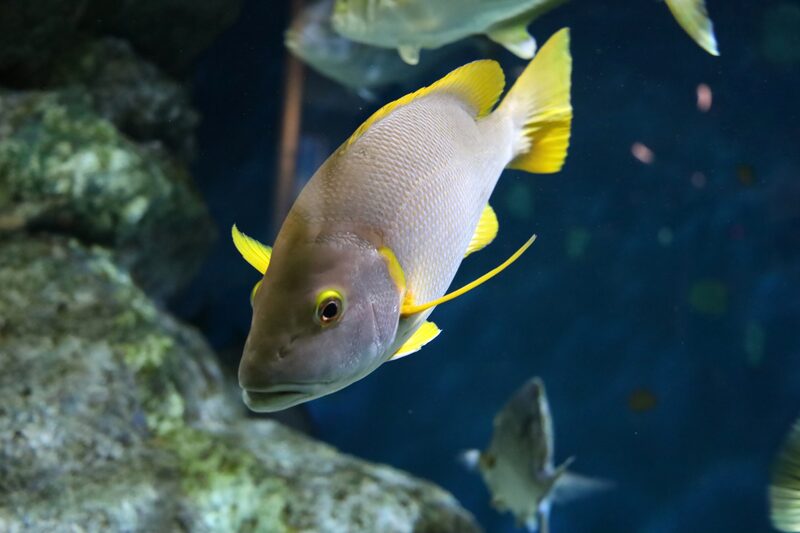
    Schoolmaster

    Lutjanus apodus

    Snapper with a long pointed snout, large mouth and one pair of enlarged upper canines; olive-gray to brownish body with about eight narrow pale vertical bars (faint or…

  • Native

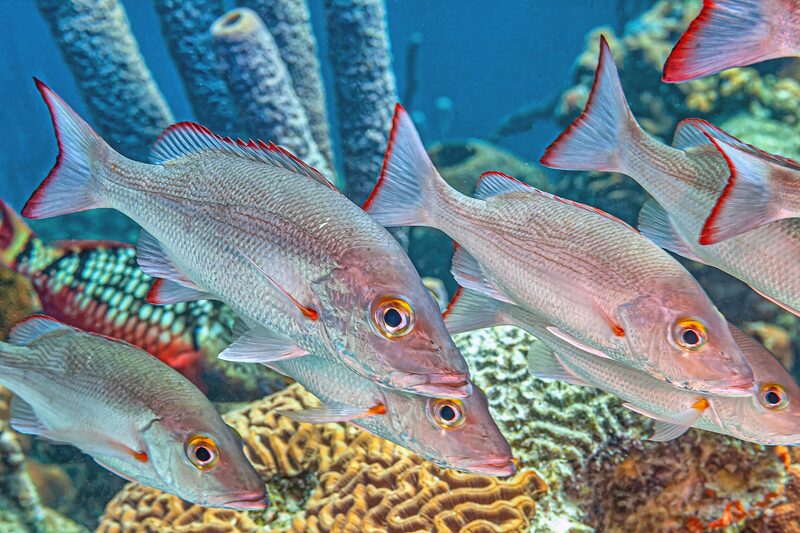
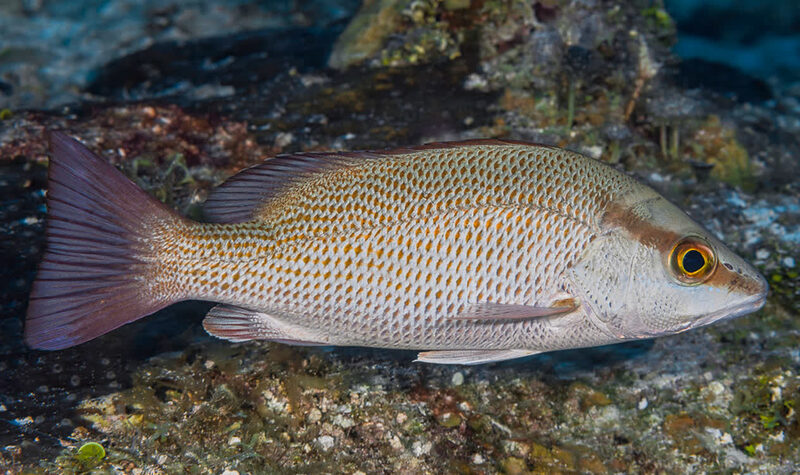
    Gray Snapper

    Lutjanus griseus

    Snapper with a slightly concave head profile and long pointed snout; gray to green with a reddish tinge and rows of small reddish-orange spots along the sides; median …

  • Native

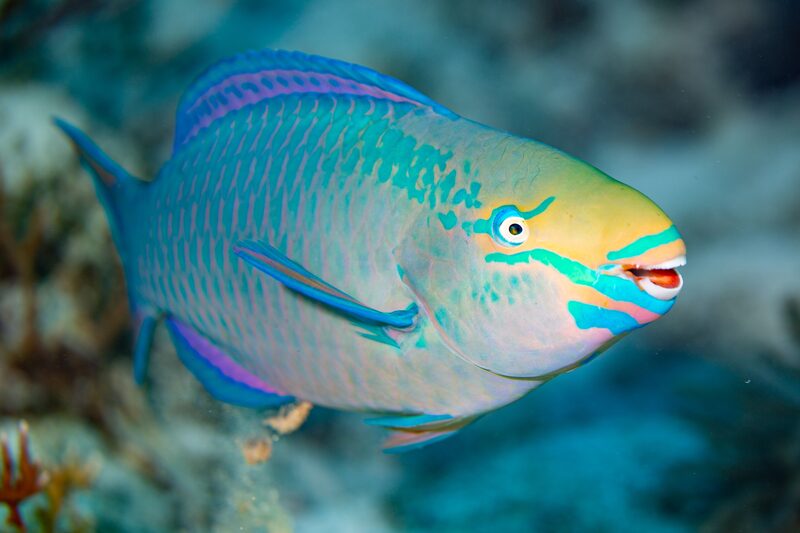
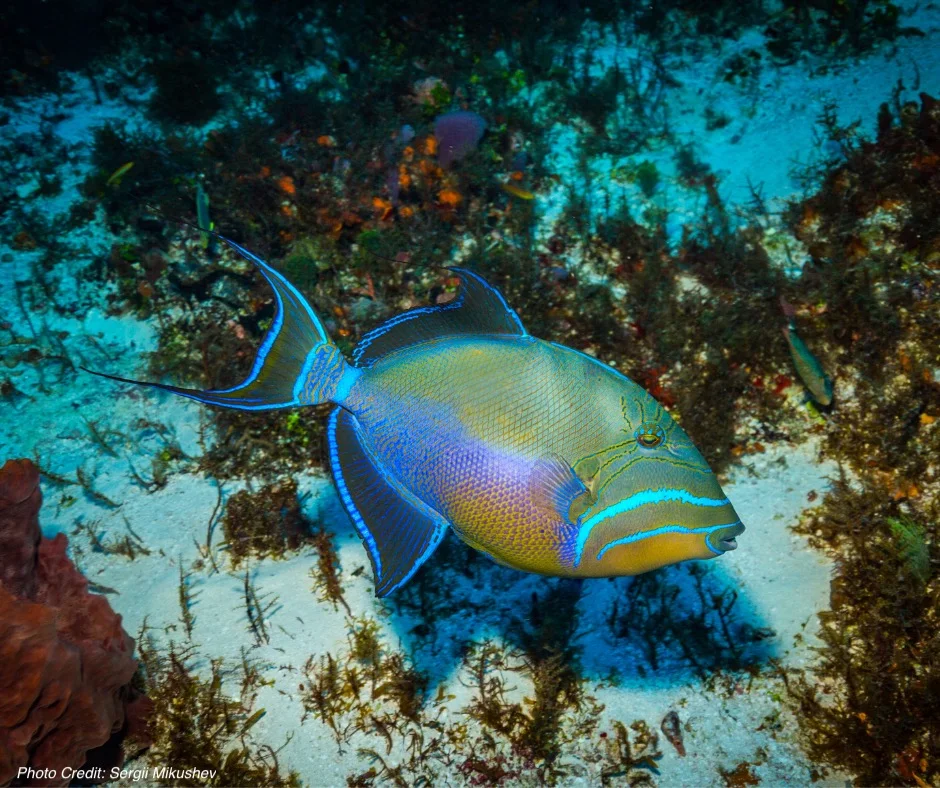
    Queen Parrotfish

    Scarus vetula

    Fusiform parrotfish with fused beak-like teeth; dorsal fin IX,10, anal fin III,9. Initial phase dark gray with a broad white stripe a little below mid-side; terminal (…

  • Native

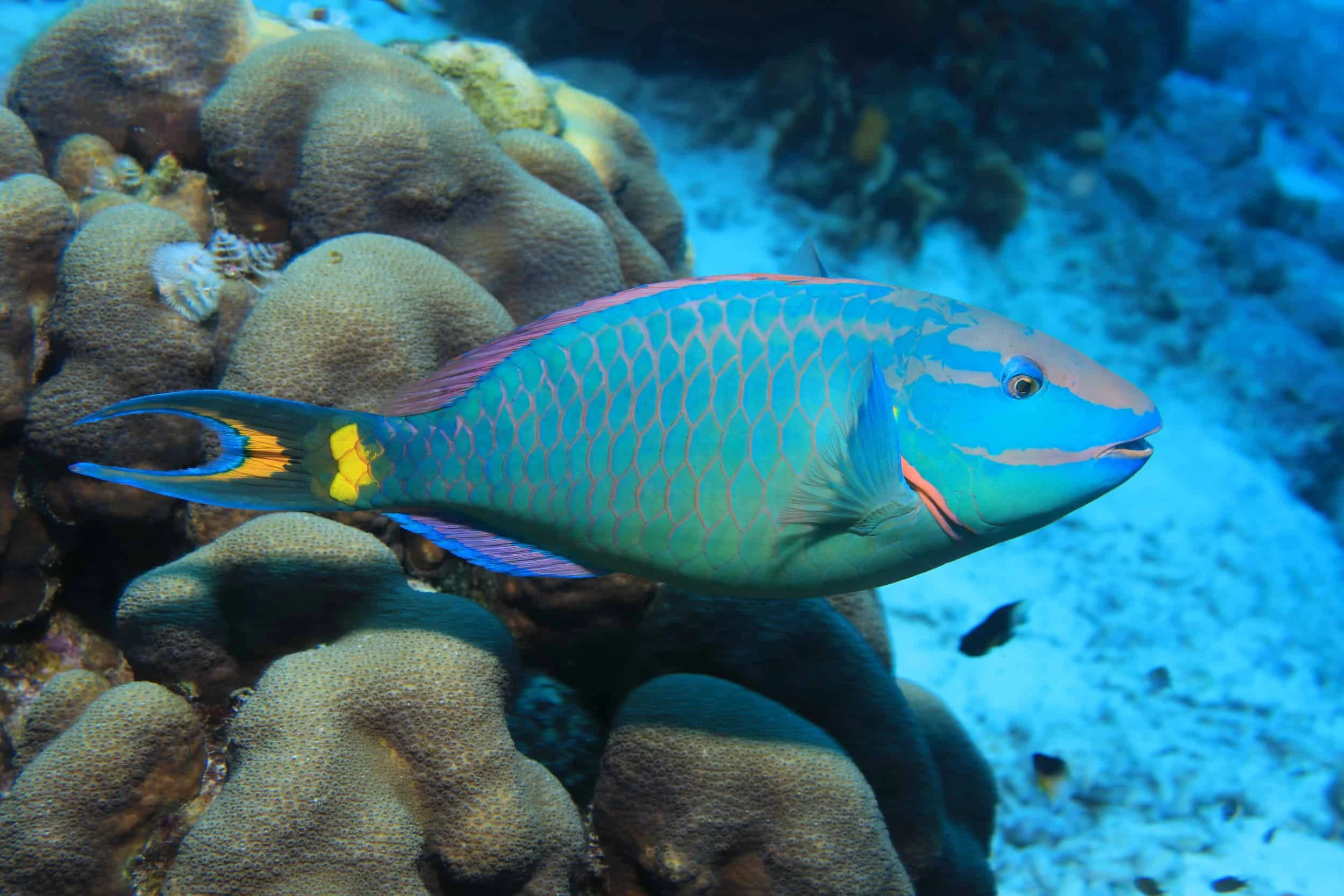
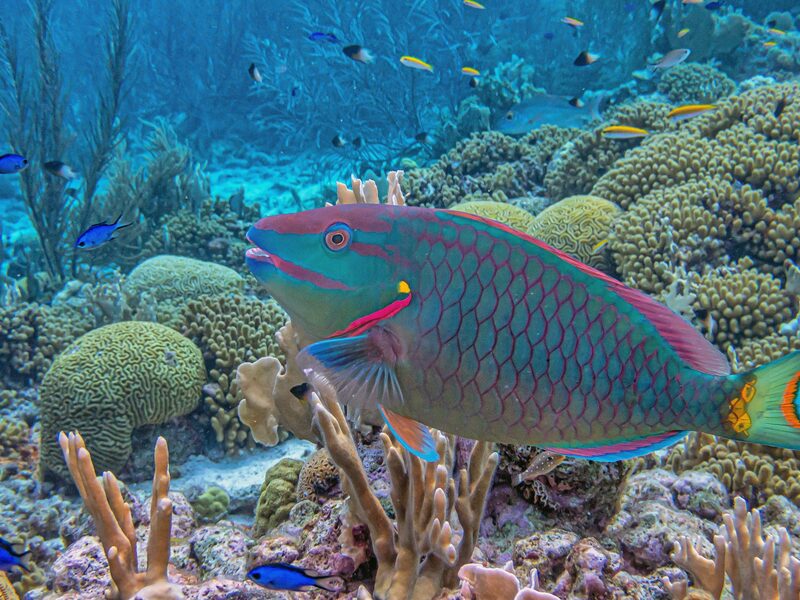
    Stoplight Parrotfish

    Sparisoma viride

    Large parrotfish with plate-like scales and a fused-tooth beak; tail changes from truncate in young to crescent-shaped in large males. Terminal males are green with th…

  • Native

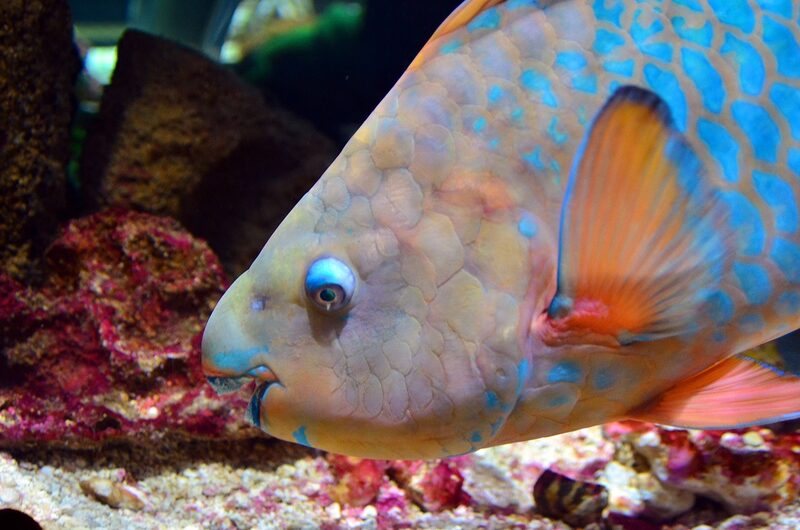
    Rainbow Parrotfish

    Scarus guacamaia

    Fins dull orange with green tongues extending into dorsal and anal fins; blue margins on median fins; blue-green dental plates; fusiform body.

Showing 12 of 301
About origin labels & occurrence records Regional status, not local sightings

Origin labels describe native or non-native status in the western Atlantic and Caribbean. They are not verified local occurrence records, and listing a fish here does not mean CRFF observed it locally. Non-native entries such as blue-streak goby may be reference-only, with no documented local introduction; lionfish is Non-native and invasive.

Native species have a native origin label for the western Atlantic and Caribbean. Protecting them helps native reef communities recover from pressures such as invasive lionfish.

How to Identify Reef Fish: A Beginner’s Guide

Use these observation techniques with the Caribbean Reef Fish Guide above. The catalog focuses on Caribbean and western Atlantic fish, with regional-origin notes and comparison entries—not worldwide species coverage.

Open the four-step identification checklist
  1. Start with body shape and fins

    Notice whether the fish is deep-bodied, flattened or elongated. Look at the tail and the outline of the dorsal fin before deciding which family to explore.

  2. Look for distinctive markings

    Note stripes, spots, bars and facial markings. Do not rely on color alone: appearance can vary with lighting, age and life phase. Photos and illustrations are reference aids, not confirmation of an identification.

  3. Add size, depth and habitat

    Record an approximate size and whether the fish was near coral, sand, seagrass or mangroves. Use these observations alongside the details available in Quick View; do not guess information you could not observe.

  4. Narrow the catalog and compare

    Search a common name, scientific name or family, or choose a family filter. Select Compare on up to three fish cards to review the available traits side by side. Use All, Native or Non-native to change the regional-origin view.

Observe without touching, chasing, feeding or collecting fish. If the match is uncertain, record it as uncertain rather than forcing a species name.

Understanding Caribbean Reef Fish

A fish’s name is only the beginning of its story. Caribbean reef fish use different habitats, eat different foods and change as they grow. Understanding those differences helps explain how reef communities function—and why protecting fish also means protecting the places they depend on.

Groupers: Predators Among the Reef

Groupers include familiar Caribbean species such as Nassau grouper, red hind and black grouper. Nassau grouper feed on smaller fish and crustaceans, placing them within the reef’s food web as predators. Their habitat needs also change with age: juveniles can use sheltered nearshore habitats, including seagrass beds, while larger fish occupy rocky areas and coral reefs.

Explore each species separately. A shared family does not mean identical behavior, habitat or conservation needs.

Snappers: Connections Between Coastal Habitats

Snappers are part of both coastal and reef communities. Gray snapper occur around mangroves, estuaries, rocky areas and reefs. Juvenile habitat can differ from adult habitat, making nearby coastal environments important to understanding a species—not just the reef where you see a larger fish.

Compare gray snapper, schoolmaster and yellowtail snapper to discover how closely related fish differ.

Parrotfish: Feeding, Color and Reef Change

Parrotfish have distinctive beak-like teeth. Their feeding can remove material from reef surfaces and contribute to the production of reef sediment. These processes vary among species and with fish size.

Their appearance can change dramatically, too. Juvenile stoplight parrotfish have rows of white spots on a dark reddish-brown body, unlike the familiar green terminal-phase fish. Different colors do not always mean different species.

Wrasses: More Than Colorful Reef Fish

Wrasses offer a useful introduction to relationships between reef animals. Some perform cleaning behavior, removing parasites and other material from larger fish. Groupers can visit cleaning stations and allow cleaner fish close to their bodies and mouths.

Cleaning is a particular behavior—not a role shared equally by every wrasse species or life stage.

CRFF Reef Updates

Keep learning. Help protect the reef.

Get reef-fish stories, conservation updates and opportunities to support CRFF’s mission.

Conservation Learning

What Research Shows About Reef Fish

Small fish, healthy spawning grounds and thriving reef communities are connected. These studies reveal both the pressure native fish face and the difference conservation can make—from lionfish impacts in the Bahamas to red hind recovery in the U.S. Virgin Islands.

SpeciesResearch Finding
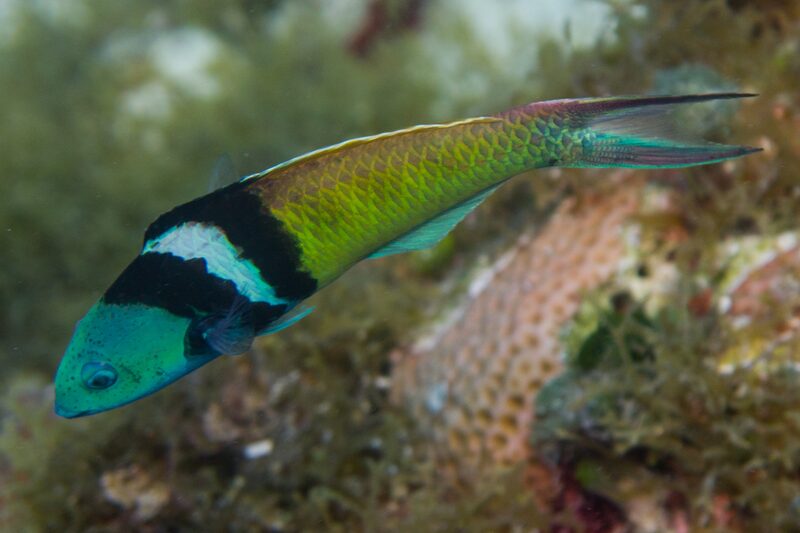
Bluehead Wrasse

33% lower juvenile density on experimental patch reefs with lionfish in the Bahamas.

Tuttle (2017), Bahamas patch-reef experiment.

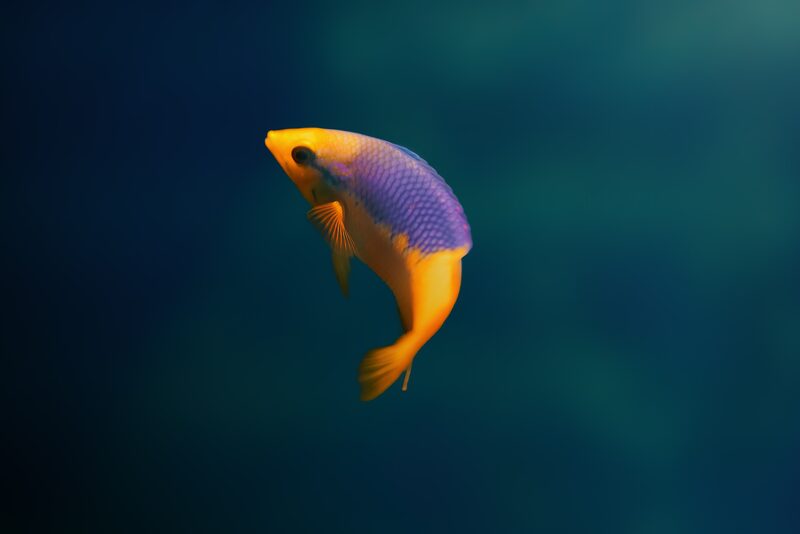
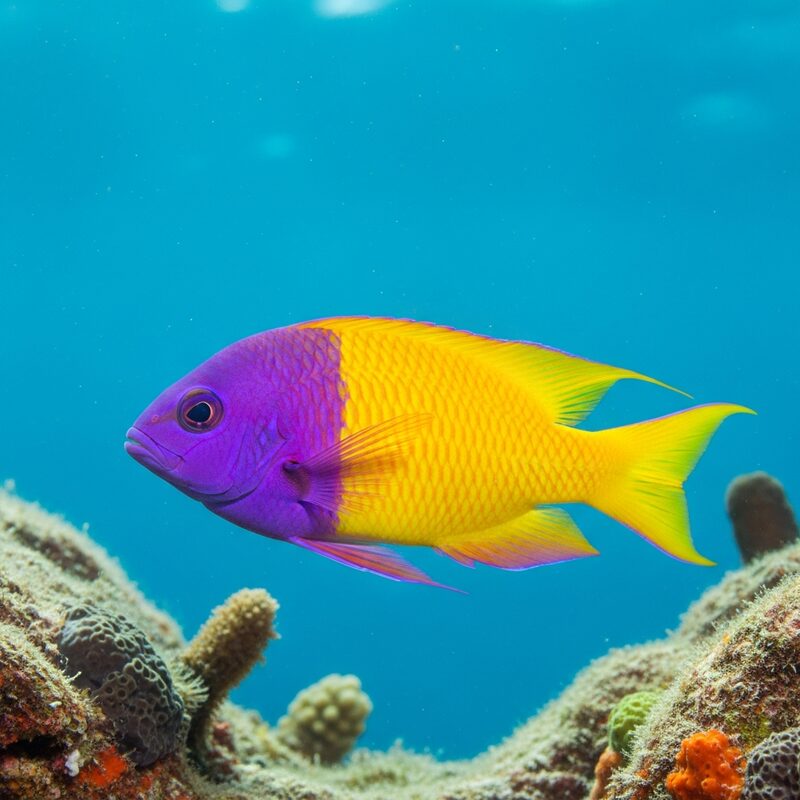
Royal Gramma

9 of 14 lionfish-exposed populations lost more than half their fish during a 28-day experiment.

Ingeman (2016), controlled field experiment.

Red Hind

Average spawning density and biomass increased by over 60% following permanent protection at Red Hind Bank, St. Thomas.

Nemeth (2005), U.S. Virgin Islands.

Protecting the next generation of reef fish means caring for the habitats where they grow, feed and reproduce. That connection is at the heart of CRFF’s conservation mission.

Why Accurate Fish Identification Matters

Identifying a reef fish is the starting point for a useful biodiversity observation. A record becomes more informative when it includes the date, location, habitat, and a photograph when safely available. If identification is uncertain, record that uncertainty rather than guessing.

Consistent identification helps researchers compare observations, investigate changes in fish communities, and plan standardized surveys. CRFF connects conservation education with field observations and research so that learning about native fish can contribute to understanding their habitats.

Observe without touching, chasing, feeding, or collecting fish.

From Nursery Habitats to Coral Reefs

Coral reefs are connected to the coastal habitats around them. For some Caribbean fish, mangroves and seagrass beds provide shelter and feeding opportunities during part of their lives.

Those connections are species-specific. Not every reef fish depends on mangroves, and not every juvenile lives in seagrass. Protecting reef life means understanding which habitats each species uses—and keeping those habitats connected.

Questions About Caribbean Reef Fish

Why can young fish look different from adults?

Color, markings and proportions can change as a fish develops. Some species also have distinct adult color phases. Compare several characteristics rather than identifying a fish by color alone.

Does seeing lots of fish mean a reef is healthy?

Fish abundance is one observation, not a complete assessment. Species diversity, size distribution, habitat condition and repeated surveys provide additional context.

How does lionfish education fit into this guide?

Understanding invasive lionfish also means understanding the native fish and habitats they can affect. Continue to our existing lionfish guide for the invasion story, ecological impacts and management context.

Classroom Activity: Follow a Fish Through Its Life

Choose one species from this guide. Describe its appearance, food and habitat. Then investigate whether its appearance or habitat changes as it grows.

Compare it with a second species. What do they share? What differs? Distinguish what the available information tells you from questions you still want to investigate.

Explore and compare Caribbean reef life →

Connected Platform

From "Why" to "Where"

Connect what you learn about Caribbean reef fish with places on CRFF’s Digital Maps Platform. Explore the map for geographic context, then return to the guide to learn about species and the habitats they use.

Help Protect the Fish You’re Learning About

Contributions help support monitoring supplies, conservation education, habitat assessment, and the development of future native reef-fish recovery capabilities.