
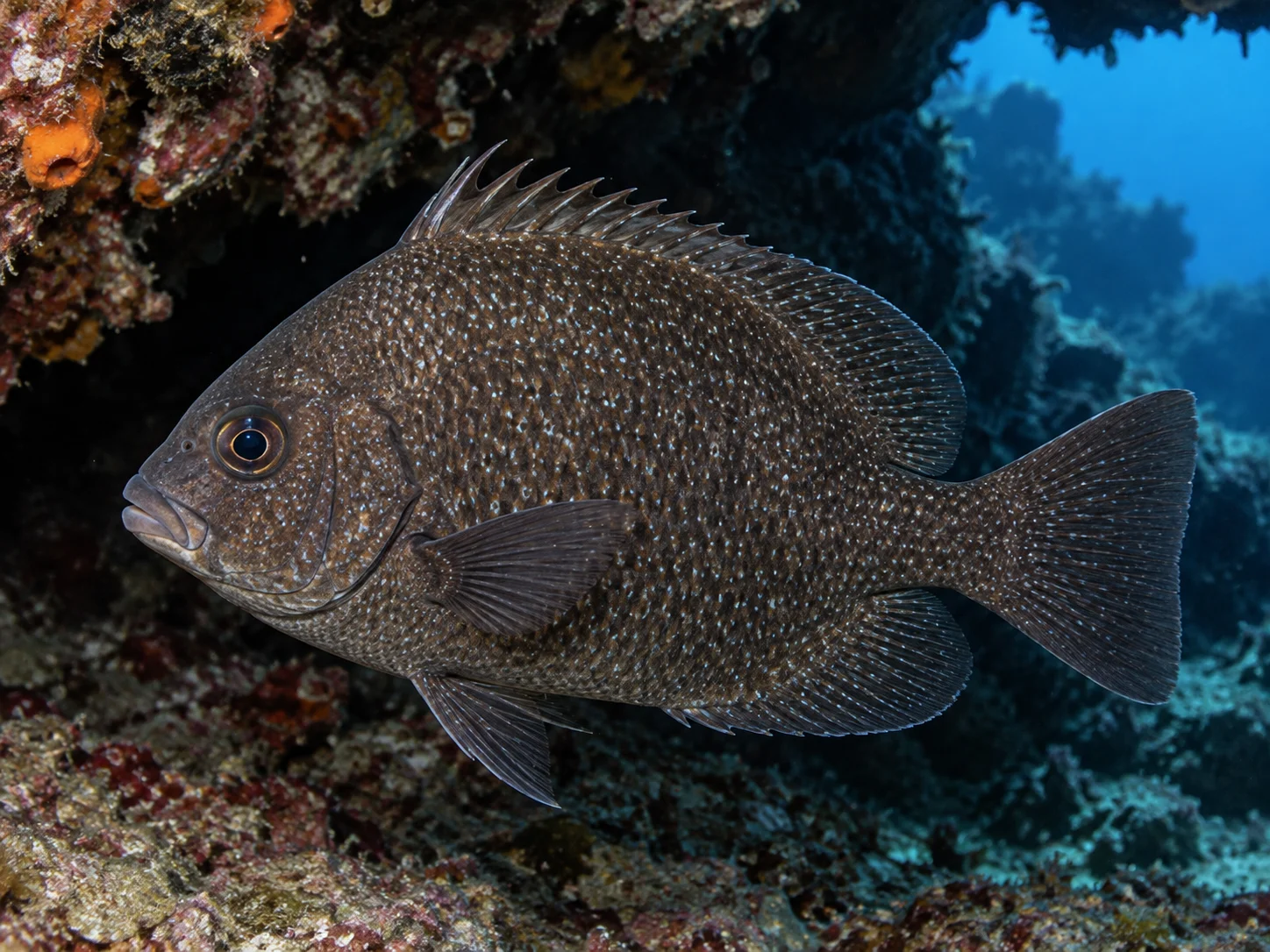
01 / SPECIES PROFILE
Species Overview
Oblong, deep, high-arched body with low head. Adults are dark grey with thin black pes; juveniles are whitish with black pes, bars on fins, and a black ring on the snout. Found at 4-110m
- Family
- Sciaenidae
- IUCN Red List category
- Least Concern
- Size
- Typical 12–20 cm (5–8 in); common length 15 cm TL (6 in); maximum recorded 25 cm TL (9.8 in).
- Depth range
- 5–91 m; 5–90 m.
- Habitat
- Marine, reef-associated, subtropical; over soft bottoms in coastal waters.
- Diet
- Diet includes bottom-dwelling crustaceans, bottom-dwelling mollusks and bottom-dwelling worms.
- Geographic range
- Western Atlantic, including Bermuda, the Gulf of Mexico, Puerto Rico, Barbados, Honduras, Panama and Venezuela.
- Vulnerability index
- 23.05
- Human hazard
- Harmless
- Reproductive mode
- Separate sexes; External fertilization; Eggs or young are not guarded; Eggs scattered in open water or on the substrate
- Common name in Spanish
- Obispo lucio, Payasito prieto
- Common name in French
- Évêque sombre
02 / NATURAL HISTORY
Field notes
Biology and ecology, shown where information is available for this species.
Secretive but approachable
Oviparous (egg-laying); has been reared in captivity.
High-hat (Pareques acuminatus): notes the name Equetus acuminatus was misapplied to this species
LC – Least Concern; Published accounts list LC assessed 2020; minor commercial fisheries
Reported countries and territories (11)
- Aruba
- Bermuda
- Colombia
- Cuba
- Curaçao
- French Guiana
- Guyana
- Mexico
- Suriname
- Trinidad and Tobago
- Venezuela
TL means total length; SL excludes the tail fin; FL measures to the tail fork. These measurements are not interchangeable.
CARIBBEAN REEF FISH FOUNDATION
From field knowledge
to reef action.
Explore the Foundation’s current conservation and research work.