
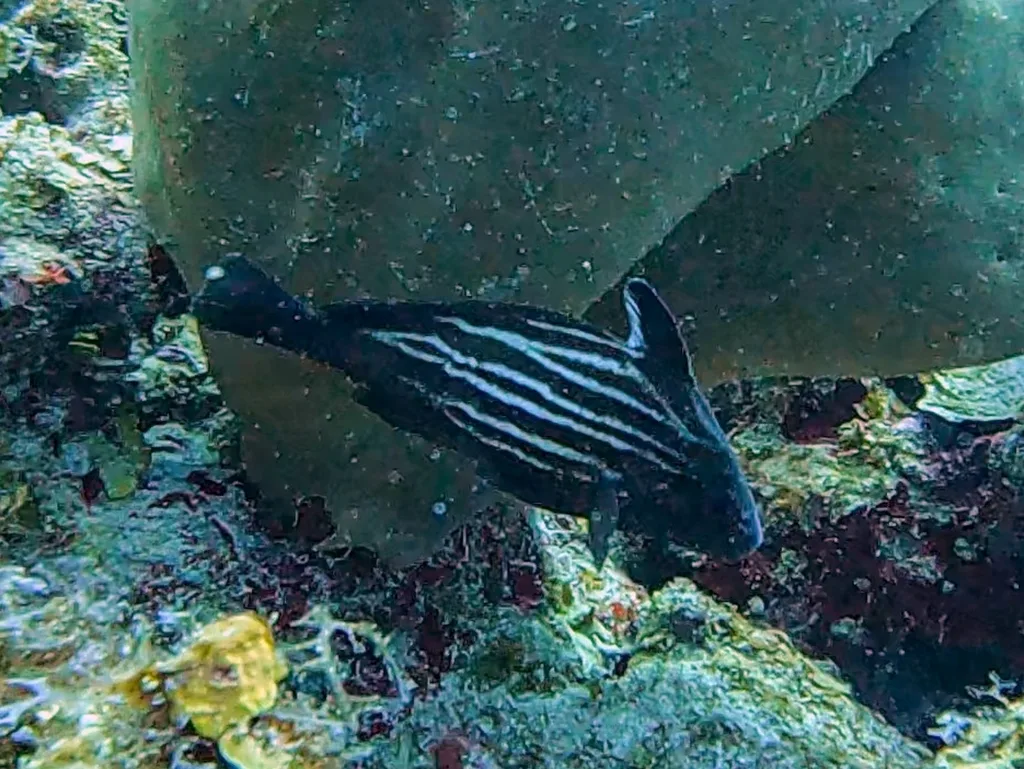

01 / SPECIES PROFILE
Species Overview
Compressed body with 3–5 broad dark horizontal stripes and narrower stripes between them; white stripe along the soft dorsal fin; 44–49 pored lateral-line scales; 5 chin pores. Dorsal IX–XI, 36–40; anal II, 7
- Family
- Sciaenidae
- IUCN Red List category
- Least Concern
- Size
- Typical 12–23 cm (5–9 in); common length 18 cm TL (7 in); maximum recorded 23 cm TL (9 in).
- Depth range
- 1–100 m, usually 3–30 m; 5–18 m.
- Habitat
- Clear water near coral reefs and adjacent bays with rough bottoms; under eroded edges of seagrass beds; adults among rocks, under ledges, in caves and sometimes in the open.
- Diet
- Crustaceans, polychaetes, small bony fishes and zooplankton.
- Geographic range
- Caribbean, Bahamas and Florida; Western Atlantic from Virginia and the Gulf of Mexico to Cuba and Puerto Rico and south to Colombia.
- Trophic level
- 3.5
- Vulnerability index
- 21.46
- Human hazard
- Harmless
- Reproductive mode
- Separate sexes; External fertilization; Eggs or young are not guarded; Eggs scattered in open water or on the substrate
- Common name in Spanish
- Chubbyu, Obispo, Payasito largo, Vaqueta, Vaqueta rayada
- Common name in French
- Curate, Évêque, Monsieur l'abbé
02 / NATURAL HISTORY
Field notes
Biology and ecology, shown where information is available for this species.
juveniles live in small same-age groups (about 3–7) in very shallow water under ledges or near sand pockets by reef crevices.
Nocturnal predator of small invertebrates and fishes on reef margins.
Mainly nocturnal; shelters by day and forages at night over sand, mud and rubble near the reef; juveniles in small groups, adults shelter among rocks and ledges.
Oviparous (egg-laying); has been reared in captivity.
Spotted Drum (Equetus punctatus): white body with one broad dark band and white-spotted dark second dorsal and tail fins, versus the High-hat's multiple dark horizontal stripes; Cubbyu (P.
LC – Least Concern; Published accounts list LC assessed 2023; minor commercial fisheries and aquarium trade
Recorded food groups and items (2)
- zoobenthos
- other benthic invertebrates
Reported countries and territories (23)
- Anguilla
- Aruba
- Bahamas
- Barbados
- Belize
- Bermuda
- British Virgin Islands
- Cayman Islands
- Colombia
- Cuba
- Curaçao
- French Guiana
- Guyana
- Honduras
- Jamaica
- Martinique
- Mexico
- Puerto Rico
- Saint Lucia
- Suriname
- Trinidad and Tobago
- United States Virgin Islands
- Venezuela
TL means total length; SL excludes the tail fin; FL measures to the tail fork. These measurements are not interchangeable.
CARIBBEAN REEF FISH FOUNDATION
From field knowledge
to reef action.
Explore the Foundation’s current conservation and research work.