

01 / SPECIES PROFILE
Species Overview
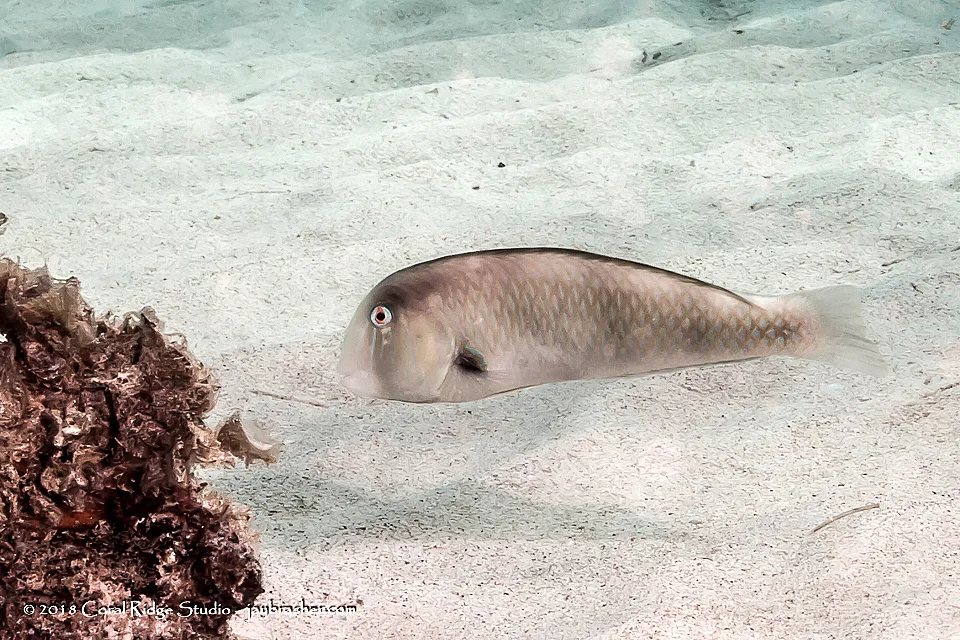
Elongated, compressed razorfish; females light greenish-gray, pinkish below, with a diffuse orange-red stripe from eye to tail base and a broad white belly patch; large males lose these marks and have a blue vertical spot on each scale, yellow head with pale blue bands and a large dark spot at the pectoral-fin base
- Family
- Labridae
- IUCN Red List category
- Least Concern
- Size
- Max recorded 19.3 cm SL (7.6 in); typical 7–12 cm (3–5 in).
- Depth range
- 2–21 m; 2–15 m.
- Habitat
- Open sandy areas near reefs.
- Diet
- Small invertebrates living in sand.
- Geographic range
- Caribbean, Bahamas and Florida; wider range southern Florida and Bahamas to northern South America
- Trophic level
- 3.5
- Vulnerability index
- 30.82
- Human hazard
- Harmless
- Reproductive mode
- Female-to-male sex change (protogyny); External fertilization
- Common name in Spanish
- Cuchillo Ilorón, Doncella Liorona, Doncella llorona, Lorito de arena
02 / NATURAL HISTORY
Field notes
Biology and ecology, shown where information is available for this species.
shows Female and Male; males and females are distinctly coloured.
Small predator of sand-dwelling invertebrates.
Dives head-first into the sand when frightened
Green razorfish (X. splendens): adults with blue-edged black midside spot (males) and greener body; pearly razorfish (X. novacula): pale greenish without the female's orange-red stripe and white belly patch.
LC – Least Concern
Recorded food groups and items (2)
- zoobenthos
- other benthic invertebrates
Reported countries and territories (10)
- Bahamas
- Belize
- British Virgin Islands
- Cuba
- Curaçao
- Martinique
- Mexico
- Puerto Rico
- United States Virgin Islands
- Venezuela
TL means total length; SL excludes the tail fin; FL measures to the tail fork. These measurements are not interchangeable.
CARIBBEAN REEF FISH FOUNDATION
From field knowledge
to reef action.
Explore the Foundation’s current conservation and research work.