
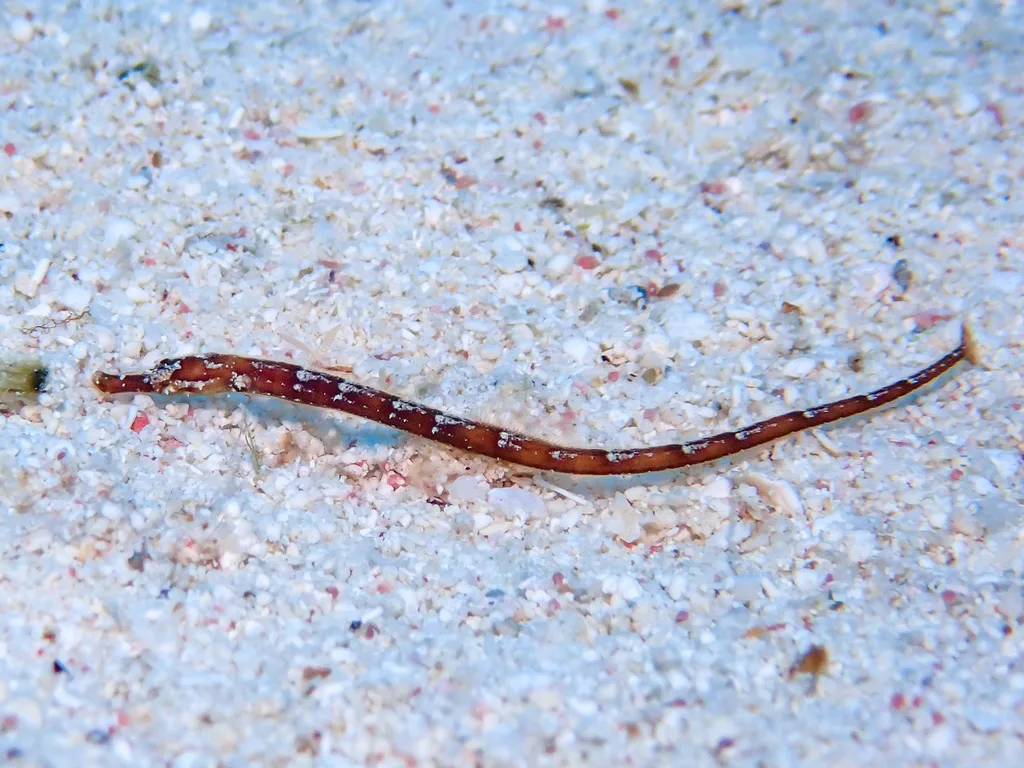
01 / SPECIES PROFILE
Species Overview
Eel-like pipefish body
- Family
- Syngnathidae
- IUCN Red List category
- Least Concern
- Size
- Typical adult 7.5–13 cm (3–5 in); maximum recorded 15.3 cm SL (6 in).
- Depth range
- 2–305 m; 1–345 m recorded.
- Habitat
- Reef-associated; usually in shallow seagrass beds..
- Diet
- Diet includes bottom-dwelling crustaceans.
- Geographic range
- Caribbean: Caribbean, Bahamas and Florida, to the Lesser Antilles; wider range North Carolina, Bermuda and the northern Gulf of Mexico to Suriname
- Vulnerability index
- 16.13
- Human hazard
- Harmless
- Reproductive mode
- Separate sexes; Fertilization in a brood pouch or similar structure; Carries developing eggs or young; External brooding
- Common name in Spanish
- Cornetica amarilla, Pez pipa aletilla, Trompetero, Trompetero brillante
02 / NATURAL HISTORY
Field notes
Biology and ecology, shown where information is available for this species.
Small predator, estimated trophic level 3.4; seagrass-bed resident.
Ovoviviparous; the male carries eggs in a brood pouch under the tail.
Shortfin Pipefish (Cosmocampus elucens): long, slender snout with top and side ridges; body marked with wide-spaced narrow pale bars. Opossum Pipefish (Microphis lineatus): very long, slender snout with dark pe; operculum has ridges. Texas Pipefish (Syngnathus texanus): moderate snout with white blotch under eye; 11-12 wide body bars. Caribbean Pipefish (Syngnathus caribbaeus): long slender snout; pattern varies between pale bars/spots or irregular lines.
LC – Least Concern
Reported countries and territories (12)
- Bahamas
- Belize
- Bermuda
- British Virgin Islands
- Cayman Islands
- Colombia
- Cuba
- Honduras
- Puerto Rico
- Suriname
- United States Virgin Islands
- Venezuela
TL means total length; SL excludes the tail fin; FL measures to the tail fork. These measurements are not interchangeable.
CARIBBEAN REEF FISH FOUNDATION
From field knowledge
to reef action.
Explore the Foundation’s current conservation and research work.