
01 / SPECIES PROFILE
Species Overview
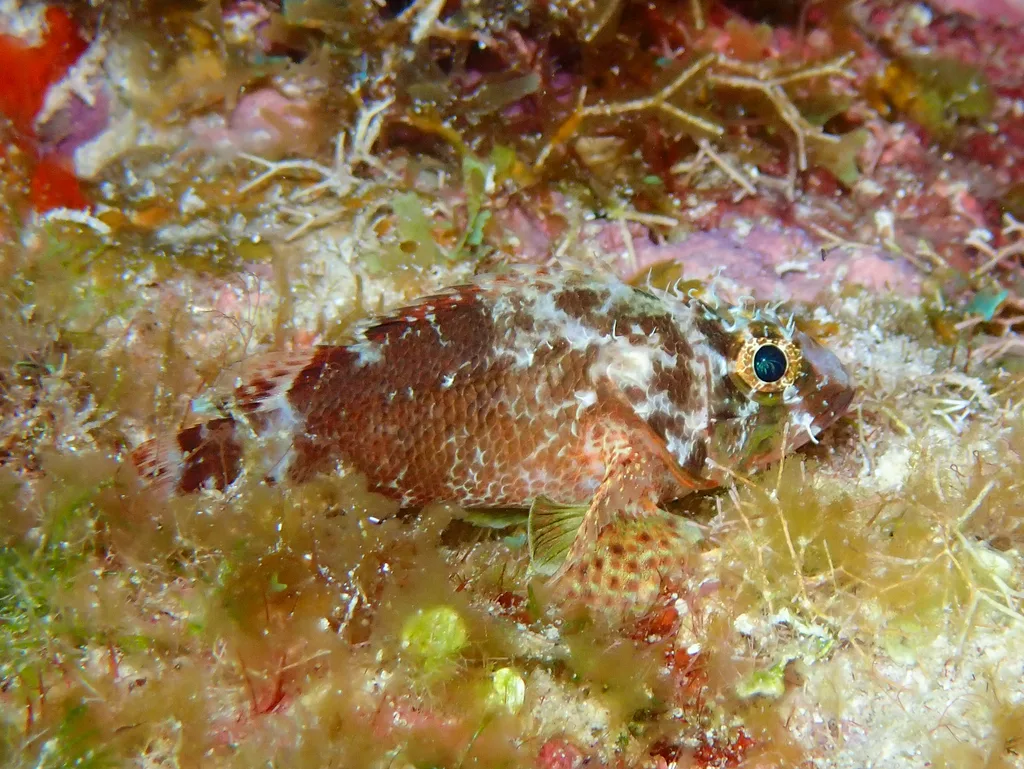
Small scorpionfish with a conspicuous dark spot on the rear dorsal spines; 13 dorsal spines, 9 soft rays; no occipital pit, palatine teeth or preorbital spines; suborbital ridge with 4–5 spiny points
- Family
- Scorpaenidae
- IUCN Red List category
- Least Concern
- Size
- 5–10 cm [2–4 in]; maximum 12 cm TL [4.7 in].
- Depth range
- 1–18 m; 0–70 m.
- Habitat
- Coral reefs, around ledges, caves and hard substrate.
- Diet
- Diet includes bony fishes, bottom-dwelling crustaceans and bottom-dwelling worms.
- Geographic range
- Bahamas, Caribbean, Florida, Gulf of America, Bermuda and Brazil; western Atlantic from Florida and the Bahamas to Panama and northern South America, including the Antilles.
- Vulnerability index
- 25.89
- Human hazard
- Harmless
- Reproductive mode
- Separate sexes; External fertilization; Eggs or young are not guarded; Eggs scattered in open water or on the substrate
- Common name in Spanish
- Escorpión de arrecife, Sapo chaznete rojo
02 / NATURAL HISTORY
Field notes
Biology and ecology, shown where information is available for this species.
Small cryptic reef predator (trophic level 3.6).
Secretive but common; sometimes hovers above hard bottom or near cave ceilings and ledges.
Oviparous.
Scorpaena species; Scorpaenodes lacks the occipital pit and preorbital spines and has 13 rather than 12 dorsal spines.
LC – Least Concern (assessed 2012).
Reported countries and territories (26)
- Anguilla
- Antigua and Barbuda
- Aruba
- Bahamas
- Barbados
- British Virgin Islands
- Cayman Islands
- Cuba
- Curaçao
- Dominica
- Dominican Republic
- Grenada
- Guadeloupe
- Haiti
- Jamaica
- Martinique
- Mexico
- Montserrat
- Panama
- Puerto Rico
- Saint Kitts and Nevis
- Saint Lucia
- Saint Vincent and the Grenadines
- Trinidad and Tobago
- Turks and Caicos Islands
- United States Virgin Islands
TL means total length; SL excludes the tail fin; FL measures to the tail fork. These measurements are not interchangeable.
CARIBBEAN REEF FISH FOUNDATION
From field knowledge
to reef action.
Explore the Foundation’s current conservation and research work.