

01 / SPECIES PROFILE
Species Overview
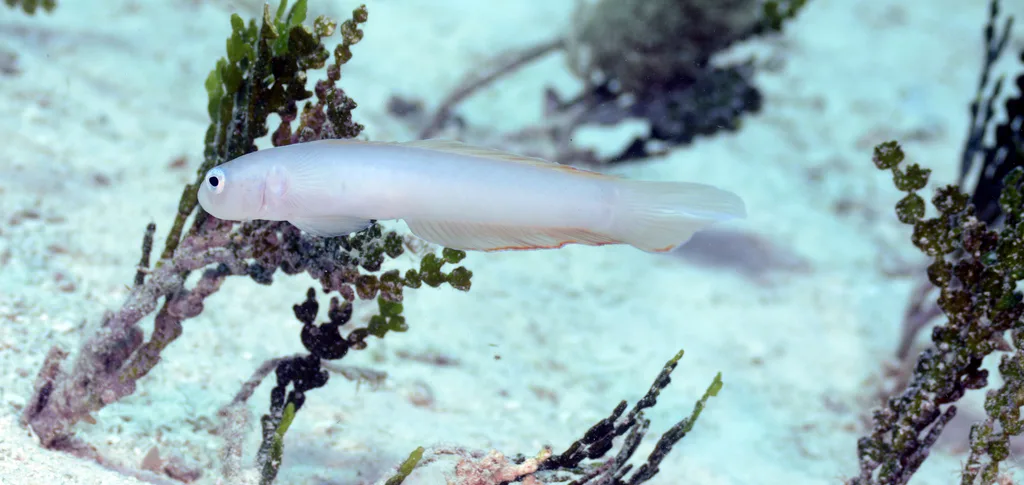
Slender, pale bluish-gray dartfish with lavender tones, greenish-yellow fins and a long, rounded tail
- Family
- Microdesmidae
- Size
- Maximum recorded 12 cm TL (5 in).
- Depth range
- 3-60 m.
- Habitat
- Sand and coral rubble, living in U-shaped burrows.
- Diet
- Zooplankton.
- Geographic range
- Southeastern Florida, the Antilles and Brazil.
- Trophic level
- 3.4
- Vulnerability index
- 10
- Human hazard
- Harmless
- Reproductive mode
- Separate sexes; External fertilization; Monogamy; Egg or nest guarding; Nesting
- Common name in Spanish
- Góbido azul, Gobio Azu, Gobio azul
02 / NATURAL HISTORY
Field notes
Biology and ecology, shown where information is available for this species.
Ecological role
Plankton feeder.
Behavior
Usually in pairs, hovering near its burrow and diving in when threatened.
Reproduction
Monogamous pairs.
Look-alikes
Blue goby (Ptereleotris calliura): bluer with a blue-edged tail.
Conservation context
LC – Least Concern.
Recorded food groups and items (2)
- zooplankton
- other planktonic invertebrates
Reported countries and territories (24)
- Anguilla
- Antigua and Barbuda
- Aruba
- Bahamas
- Barbados
- British Virgin Islands
- Cayman Islands
- Cuba
- Curaçao
- Dominica
- Dominican Republic
- Grenada
- Guadeloupe
- Haiti
- Jamaica
- Martinique
- Montserrat
- Puerto Rico
- Saint Kitts and Nevis
- Saint Lucia
- Saint Vincent and the Grenadines
- Trinidad and Tobago
- Turks and Caicos Islands
- United States Virgin Islands
TL means total length; SL excludes the tail fin; FL measures to the tail fork. These measurements are not interchangeable.
CARIBBEAN REEF FISH FOUNDATION
From field knowledge
to reef action.
Explore the Foundation’s current conservation and research work.