
01 / SPECIES PROFILE
Species Overview
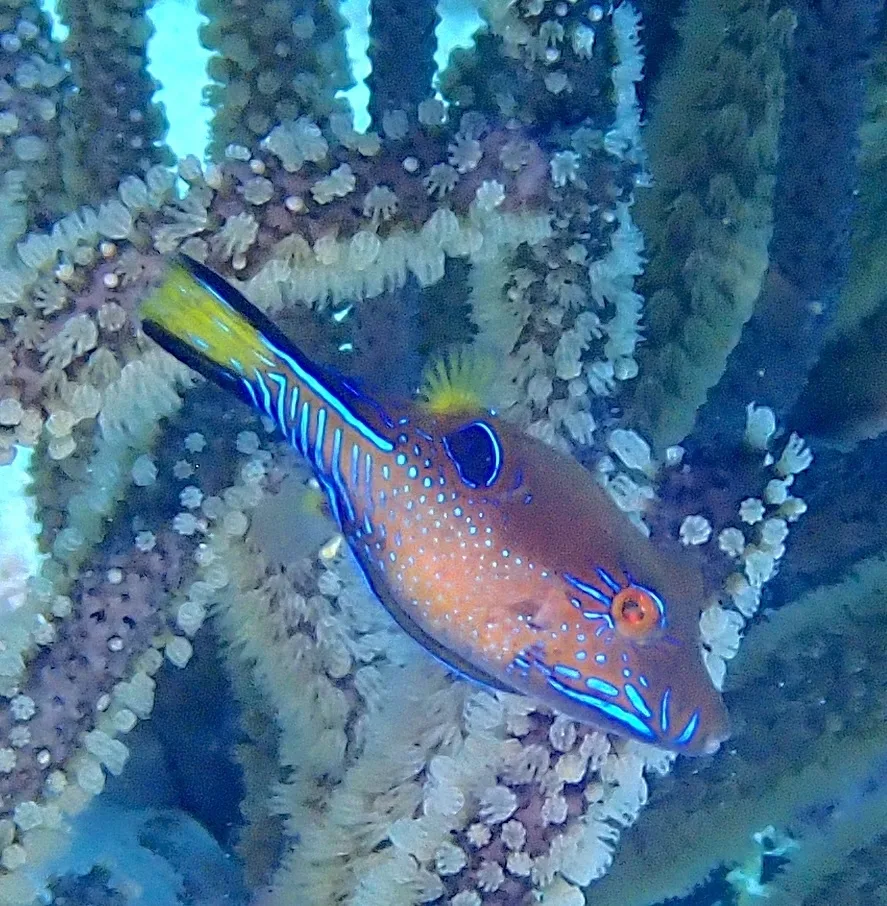
Small, short-bodied puffer with a pointed snout; a short dark stripe along the upper body from the tail's top edge to below the dorsal fin, few spots on the flanks and back, bars on the snout and no bars on the tail fin; dorsal fin 10–11 soft rays, anal fin 9
- Family
- Tetraodontidae
- IUCN Red List category
- Least Concern
- Size
- Typically 5–10 cm (2–4 in); maximum recorded 12 cm TL (4.7 in).
- Depth range
- 2–30 m; 1–40 m.
- Habitat
- Reefs and nearby habitats such as seagrass beds.
- Diet
- Broad diet of seagrass, sponges, crabs and other crustaceans, mollusks, polychaete, sea urchins, sea stars, hydroids and algae.
- Geographic range
- Caribbean: throughout, with. Wider Atlantic: South Carolina and Bermuda to Tobago and the Lesser Antilles.
- Trophic level
- 2.77
- Vulnerability index
- 11.03
- Human hazard
- Harmless
- Reproductive mode
- Separate sexes; External fertilization; Monogamy; Egg or nest guarding; Nesting
- Common name in Spanish
- Conejo, Corrotucho de piedra, Sapo, Tamboril, Tamboril Narizón, Tamboril narízon, Tamborín narizón
- Common name in French
- Tétrodon nain
02 / NATURAL HISTORY
Field notes
Biology and ecology, shown where information is available for this species.
shows a distinct night color pattern
Omnivorous reef grazer and invertebrate predator (trophic level about 3.3,).
Monogamous mating system
Oviparous with no parental care; monogamous.
Sharpnose Puffer (Canthigaster rostrata): Tail base pes end under the dorsal and anal fins; the yellow tail has broadly black top and bottom margins. South Atlantic Sharpnose Puffer (Canthigaster figueiredoi): Features two black pes from the tail base to the gill opening and two tail-base spots. Goldface Toby (Canthigaster jamestyleri): A black spot at the dorsal fin base and a yellow, blue-spotted tail.
LC – Least Concern; collected commercially and for the aquarium trade, but rated low fishing vulnerability and high resilience
Recorded food groups and items (5)
- plants
- other plants
- benthic algae/weeds
- zoobenthos
- other benthic invertebrates
Reported countries and territories (29)
- Anguilla
- Antigua and Barbuda
- Aruba
- Bahamas
- Barbados
- Belize
- Bermuda
- British Virgin Islands
- Cayman Islands
- Cuba
- Curaçao
- Dominica
- Dominican Republic
- Grenada
- Guadeloupe
- Haiti
- Jamaica
- Martinique
- Mexico
- Montserrat
- Nicaragua
- Puerto Rico
- Saint Kitts and Nevis
- Saint Lucia
- Saint Vincent and the Grenadines
- Trinidad and Tobago
- Turks and Caicos Islands
- United States Virgin Islands
- Venezuela
TL means total length; SL excludes the tail fin; FL measures to the tail fork. These measurements are not interchangeable.
CARIBBEAN REEF FISH FOUNDATION
From field knowledge
to reef action.
Explore the Foundation’s current conservation and research work.